Polished concrete in an Austin home
For homeowners, remodelers, and custom-home builders, polished concrete floors in Austin offer a durable, low-maintenance surface with a distinctive look. It handles Austin’s dust, pets, and indoor-outdoor living better than most soft floors, and there is no coating to peel or lift at the edges.
The two routes into it are quite different. Renovating an existing slab means working with concrete that was poured for structure, not for looks, and often covered for decades. Planning a floor into a new build means influencing the pour itself, which gives far more control over the finished result.
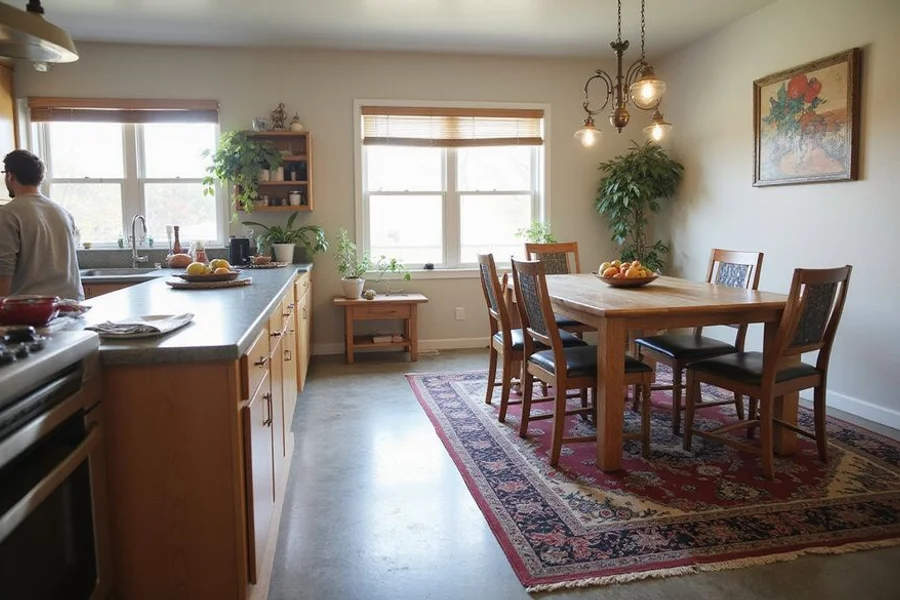
Either way, we set expectations for appearance, comfort, and upkeep using samples or a mockup before work starts. A ground test area on your own slab is worth more than any gallery photograph.
Remodels: what the slab under your floor is likely to be
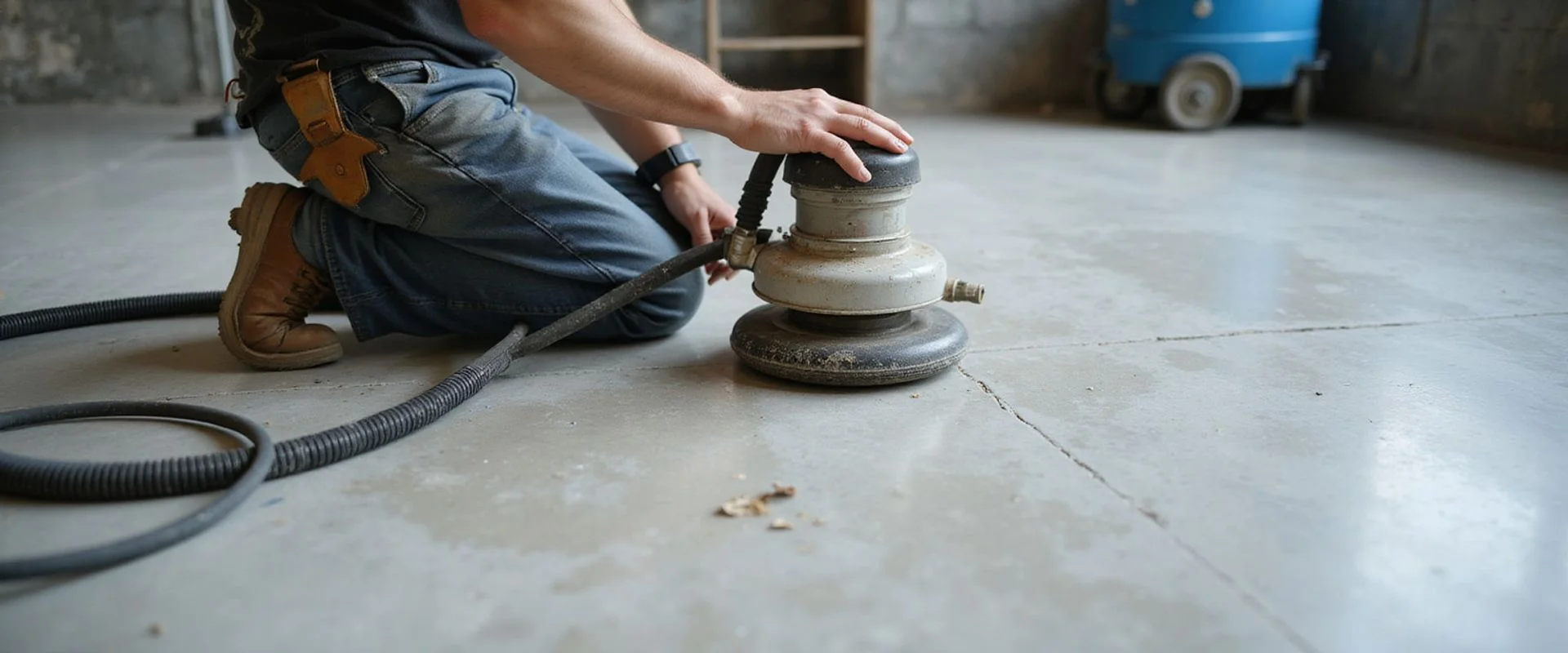
Most Austin remodel slabs have a history. Tile leaves thinset ridges and ghosting. Carpet leaves tack holes around the perimeter and sometimes adhesive across the field. Plumbing and electrical work leaves trench lines patched with a different mix, which will always read differently after polishing.
None of that necessarily rules out a beautiful floor. Salt-and-pepper exposure is particularly forgiving, because a consistent fine aggregate scatter distracts the eye from minor variation. But the honest sequence is: remove the covering, grind a test area, look at it together, then decide. We cover the specifics in our guide to polishing concrete after tile or carpet removal and the broader question of whether existing concrete can be polished.
If the slab is too damaged, too soft, or too patched, a polishable overlay creates a fresh uniform surface that can then be ground and polished. That is a real option, not a consolation prize.
New builds: decisions that happen before the pour
If your home has not been poured yet, you have influence over things that cannot be added later:
- Mix and aggregate — what stone is in the concrete determines what an exposed-aggregate finish can look like.
- Flatness — a flatter pour gives a more even cream finish and reduces the grinding required.
- Curing — a properly cured slab typically needs around 28 days before densification and high-sheen work.
- Protection — framing, drywall, and paint trades will damage an unprotected slab. Coverings and sequencing prevent that.
We work with your builder on those points and confirm readiness on site. The full checklist is in planning polished concrete for new construction.
Side by side, the two routes differ on almost every decision that matters:
| Decision | Existing slab (remodel) | New pour (build) |
|---|---|---|
| Aggregate and colour | Fixed by whatever was poured; revealed by a test grind | Specified in the mix before the pour |
| Flatness | Worked with as found; heavy variation adds grinding | Controlled by the finishing crew |
| Surface preparation | Removal of tile, carpet, adhesive, and old sealers first | Minimal — protection matters more than removal |
| Repairs | Trenches, tack holes, and patches are normal and visible | Few, if the slab is protected through construction |
| Finish certainty | Confirmed only after a test area is ground | Predictable from a specified mix and sample |
| Schedule risk | What is under the covering is unknown until it comes up | Cure time (around 28 days) drives the sequence |
Choosing a finish you will still like in five years
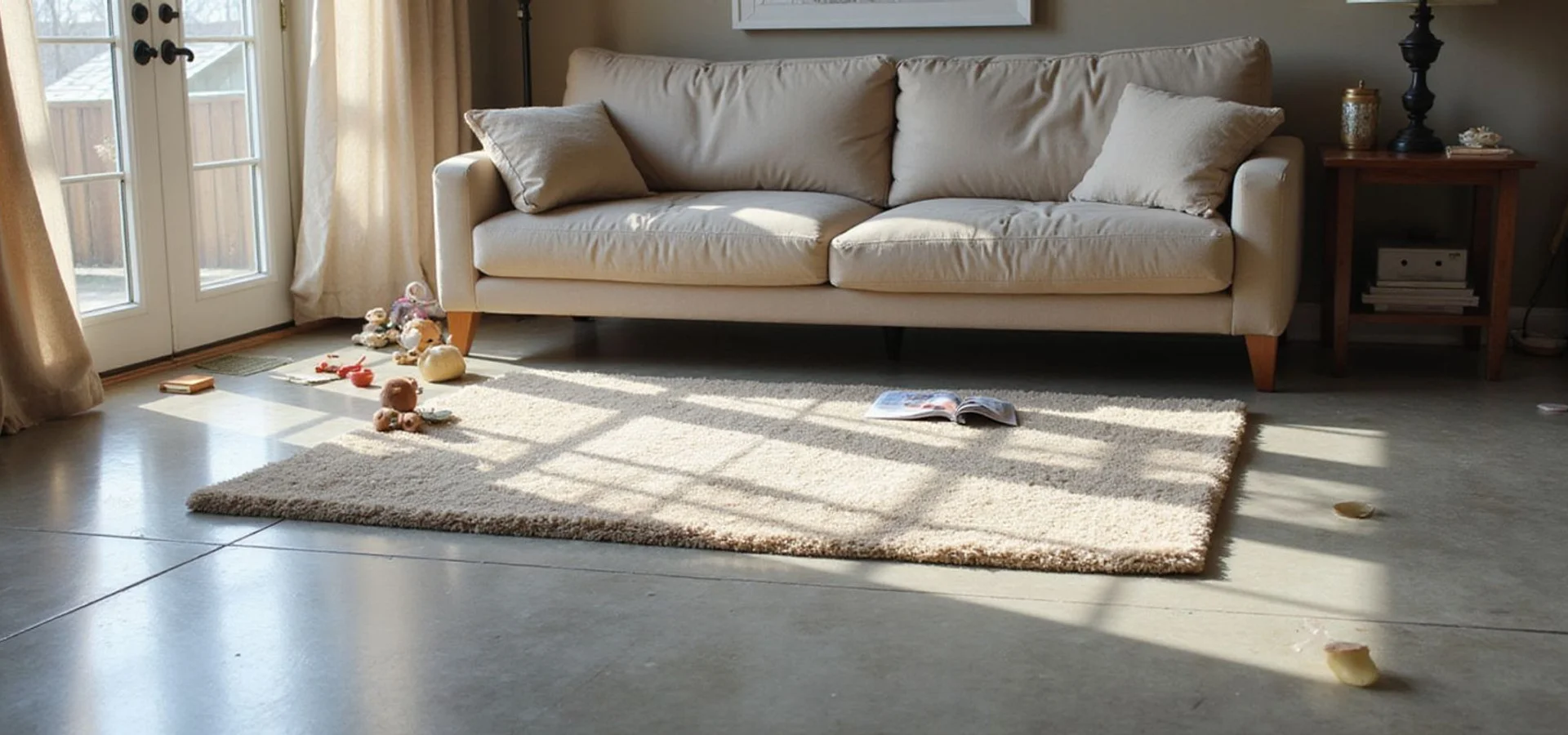
Our most common piece of advice: pick the finish for the room, not for the photograph. A high-gloss cream floor in a sunlit open-plan space shows every footprint and settles into a maintenance routine some households dislike. A satin salt-and-pepper floor in the same room hides daily life and still looks deliberate.
Sheen and exposure are separate choices, and both should be seen under your own lighting before you decide. Our aggregate exposure guide explains how deep cuts reveal larger stone, and the finishes guide covers how sheen levels actually read in a lived-in room.
What drives cost in a home project
We quote per project rather than publishing a rate, because the same floor area carries wildly different scope. In residential work the number moves on four things.
What has to come up first. Carpet is quick. Vinyl and its adhesive are slower. Ceramic tile on a full thinset bed is the slowest of all, and a surprising number of Austin homes have two layers.
What the slab needs. Crack repair, tack-hole filling, trench patching, and dealing with soft surface concrete are all preparation before any polishing pass.
How the house is laid out. Six small rooms with doorways and closets cost more per square foot than one open-plan space, because edge work and repositioning dominate.
The finish you choose. A deeper exposure means more cutting passes; a higher sheen means more refining passes. Colour and protective treatments are separate specified steps.
The full breakdown is in our Austin polished concrete cost guide, and the checklist for comparing competing quotes fairly is in how to compare polished concrete quotes.
When another floor suits a room better
We would rather say this during the assessment than have you discover it afterwards.
If comfort underfoot is the priority in a bedroom, timber or a resilient floor is the honest recommendation. If a bathroom is regularly wet, traction and the practicalities of the room deserve a specific conversation rather than a blanket yes. And if the slab under your existing floor turns out to be too damaged, too soft, or too heavily patched to deliver a finish you would enjoy, a polishable overlay gives uniformity where grinding the original would not.
Polished concrete is an excellent floor for most of an Austin home. It is not the right answer for every room in it, and a specialist should be willing to tell you which is which.
Living with a polished concrete floor
Day-to-day care is dust mopping and periodic damp cleaning with clean water or a neutral-pH cleaner. No waxing, no stripping, no annual recoat. Acidic spills — wine, citrus, some cleaning products — should be wiped promptly, because acid etches concrete regardless of how well it is polished.
It is a hard surface, and we will say that plainly rather than pretend otherwise. Rugs in seating areas, a mat at the entry, and realistic expectations about acoustics in a large open room make the difference between a floor people love and one they merely tolerate. Where comfort underfoot is the priority, we will tell you another system may suit that room better.