Why we do not publish a price per square foot
You will find sites quoting a tidy range per square foot for polished concrete in Austin. We do not, for one reason: the same 1,500 square feet can carry completely different scope, and a published range that ignores that is a marketing number rather than useful information.
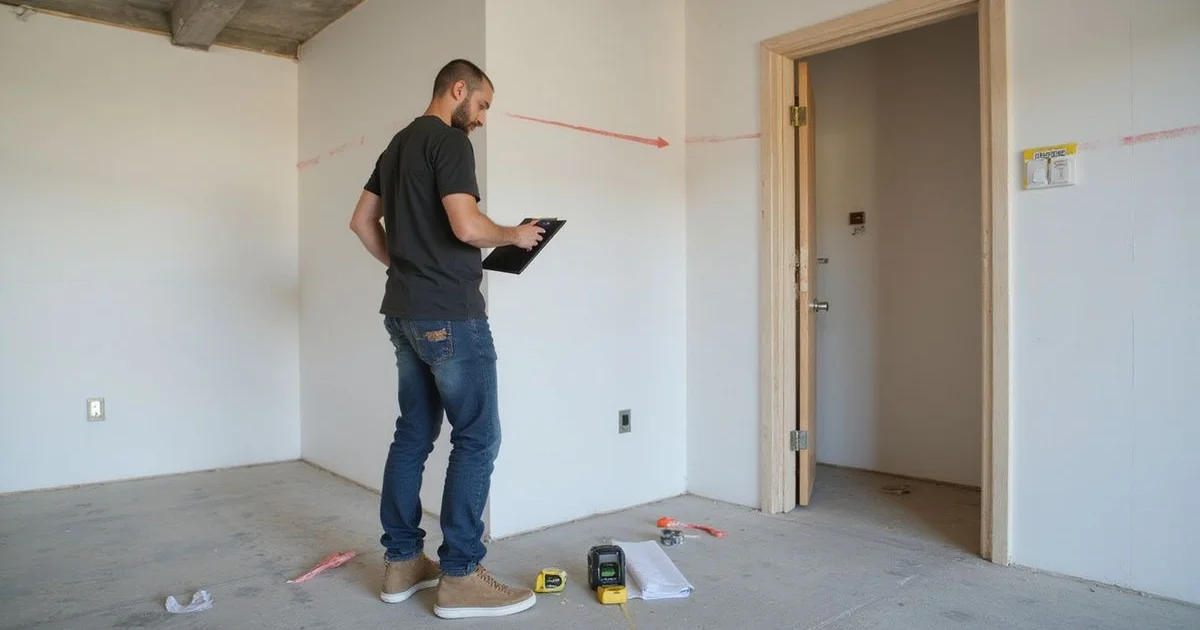
Two floors, identical area. One is a bare, sound, recently poured slab in an empty new build. The other is a 1970s slab under ceramic tile, with a patched plumbing trench, three cracks, and a kitchen island to work around. Polishing the first is straightforward production work. The second needs removal, repair, edge detail, and careful expectation setting before anyone starts a grinder.
What we can do is explain every factor that moves the number, so you can read your own quote — and anyone else’s — properly. That transparency is a core part of how mechanical polishing gets scoped here.
The factors that actually move the price
1. Floor area and room shape
Larger open areas are more efficient: the grinder runs longer between turns, and production per hour rises. The same total area split into six small rooms with doorways and closets costs more to polish than one open plan space, because edge work and repositioning dominate.
2. Existing flooring removal
Carpet is quick. Vinyl and its adhesive are slower. Ceramic tile with a solid thinset bed is slow and dusty. Multiple layers — tile over vinyl over adhesive, which we see regularly in Austin remodels — multiply the work. This is labour that happens before polishing starts, and it is quoted separately for exactly that reason.
3. Slab condition and repairs
Crack repair, tack-hole filling, patching spalls, addressing trenches, and dealing with soft or contaminated surface concrete all add preparation time. This is also the least predictable item until the existing floor is off, which is why a good quote states what has been assumed.
4. Edge and detail work
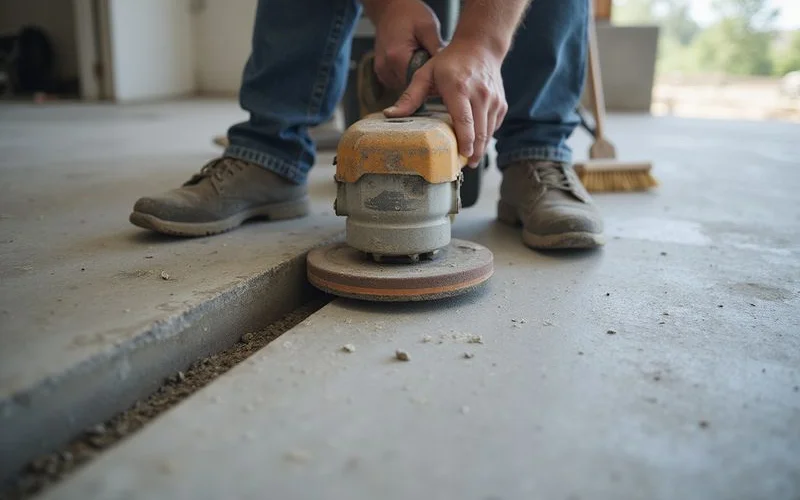
Perimeters, door thresholds, stairs, around islands, and inside closets are all done with hand-held or edge machines. It is slower than open-floor work and the finish must match. On a room with a lot of perimeter relative to its area, edge work is a meaningful share of the job.
5. Aggregate exposure
A cream finish is a shallow cut. Exposed aggregate means removing more material, which means more passes, more tooling wear, and more time. Deeper exposure also raises the risk of encountering something unexpected in the slab. The full breakdown is in our aggregate exposure guide.
6. Sheen level
Each additional refining step is another pass across the entire floor. A matte finish stops earlier in the sequence than a high-gloss one. That difference is real labour.
7. Colour and protective treatments
Dye or stain is an additional specified step with its own materials and application time. Protective treatments likewise. Neither is automatically included, and neither should appear in a quote without being named.
8. Access, phasing, and schedule
Upper floors, restricted parking, elevator-only access, occupied buildings, and off-hours work all add time. Commercial phasing — polishing in zones around a trading business — costs more than an empty building, because mobilisation happens repeatedly.
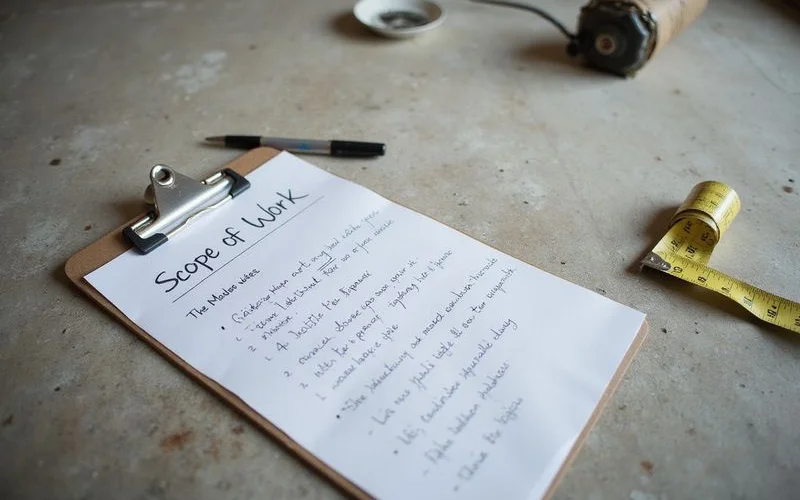
What a proper quote should state
| Item | What to look for |
|---|---|
| Removal scope | What is being removed, and whether disposal is included |
| Preparation and repairs | Crack filling, patching, and what happens if more is found |
| Aggregate exposure | Stated as a class, backed by an approved sample |
| Sheen level | Stated, not implied by a grit number |
| Densifier | Product type named |
| Treatments | Any protective treatment or colour, named separately |
| Exclusions | Furniture moving, protection after handover, structural work |
| Quote or estimate | Whether the figure is fixed, and what could change it |
The question that saves the most money
“What is not included in this number, and what would make it go up?” A contractor who answers that clearly is one you can compare fairly against the next bid.
Why the cheapest quote is often the most expensive
A low number usually gets there by leaving something out. The common omissions:
- Removal priced as though there is no adhesive underneath
- No allowance for crack repair, quoted as a variation later
- Edge work “included” but finished to a visibly different standard
- No densifier, or a token application, so the floor never reaches clarity
- A finish specified only as a grit number, leaving appearance undefined
None of these show up in a headline figure. All of them show up in the finished floor or the final invoice. Our quote comparison guide is a line-by-line checklist for putting competing bids on equal terms.
Where budgets typically diverge
Two projects of similar size can land in very different places, and it is almost always one of these three reasons.
Removal scope. A bare slab in a new build needs no removal at all. The same area under ceramic tile with a full thinset bed can add a substantial share of the project cost before any polishing happens. This is the single biggest swing factor in residential work.
Repair scope. A sound slab needs crack filling at most. A slab with trenches from previous plumbing work, multiple patch areas, and perimeter tack holes needs days of preparation.
Finish ambition. Cream at a satin sheen is a moderate cut and a moderate polishing sequence. Deep aggregate exposure at high gloss is more passes at every stage, plus more tooling consumed.
Everything else — access, phasing, colour, treatments — moves the number less than these three.
Thinking about cost across ten years
A useful exercise when comparing polished concrete against other floors is to look past installation.
A polished floor’s running cost is cleaning consumables plus occasional burnishing. There is no recoating cycle, no stripping and resealing, and no replacement at the end of a wear layer’s life. Damage is repaired locally rather than by replacing a section.
A coated floor carries a recoat cycle. A resilient or timber floor carries refinishing or replacement. Carpet in a busy household carries replacement on a fairly short cycle.
That comparison does not always favour polishing — a lightly used bedroom is not the place to optimise for a ten-year floor cost — but in kitchens, entries, living areas, and commercial spaces it usually does. Our pros and cons guide covers the non-financial side of the same decision.
What we do instead of publishing a rate
An estimator reviews the details and photos you send within 24 business hours, then arranges a site visit for anything substantial. We assess the slab, grind a test area where useful, agree the finish against a sample, and put the scope in writing with its inclusions and exclusions stated. If conditions found during the work differ from those assessed, you hear about it before the cost changes, not after.
Send floor area, property use, what is on the floor now, and a few slab photos. That is enough for a genuinely useful first answer.