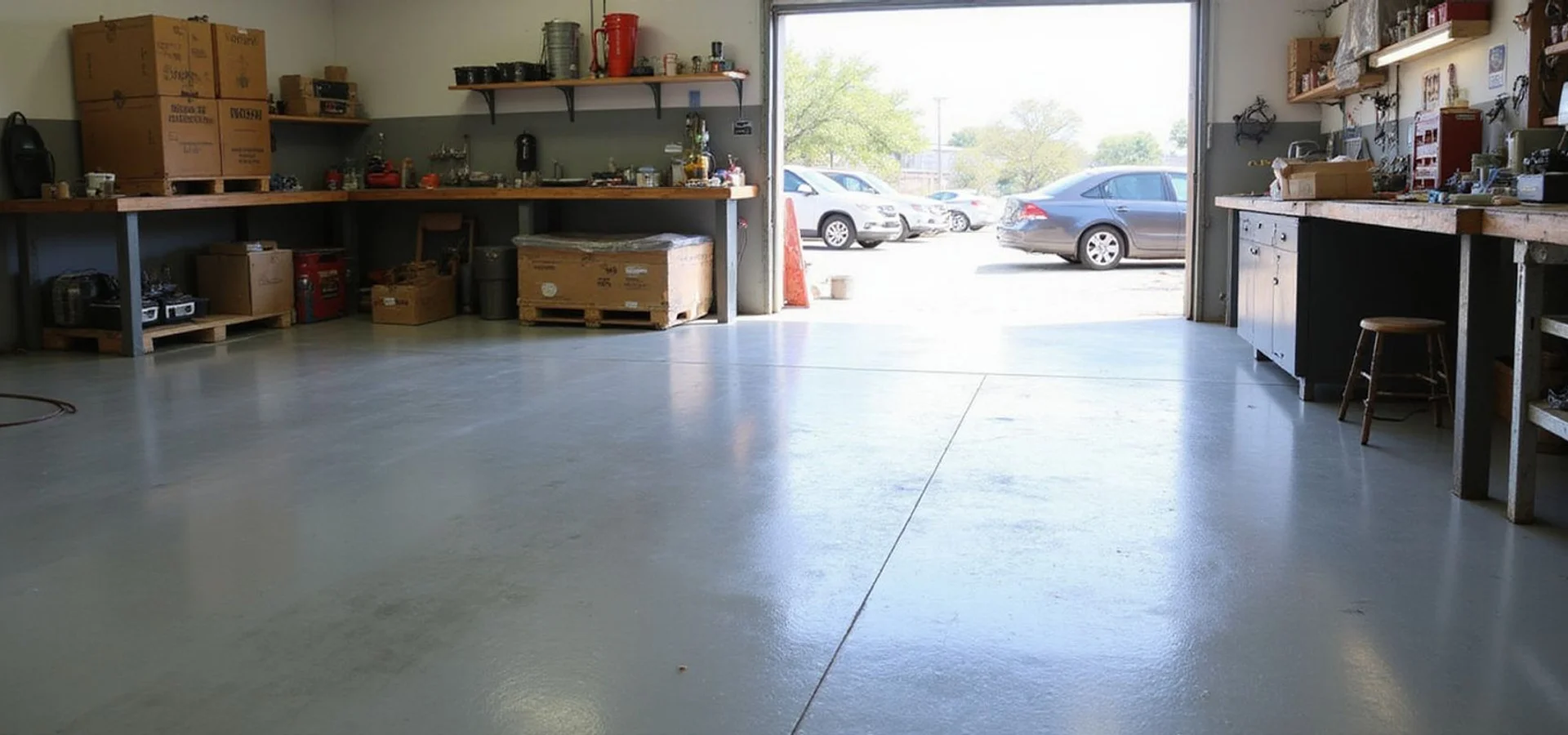
Solid-colour commercial epoxy floor in an Austin workspace

Epoxy Flooring in Austin

Epoxy coating systems installed over prepared concrete for suitable commercial and garage applications.

  • Austin specialists since 2001
  • Slab assessed before quoting
  • Written scope on every project
  • Polishing Austin concrete since 2001
  • Estimator review within 24 business hours
  • Written scope on every project
  • Austin + confirmed Central Texas coverage
Epoxy Questions

Sound Familiar?

What Austin owners and buyers usually ask before committing to epoxy.

"Epoxy" gets sold as one product, and it isn't

A thin garage kit and a 100% solids industrial build with a urethane topcoat behave nothing alike. We name the actual system before you commit.

Most coating failures happen at the bond line

Poor mechanical preparation, not the coating itself, is the leading cause of peeling and delamination. We grind or shot blast to the required profile.

Moisture you can't see can lift a new floor

Vapour driving up through a Central Texas slab pushes coatings off regardless of how well they were applied. We test before we specify.

Not sure epoxy is even the right system

If polishing would suit your space better, we say so. Epoxy is a supporting offer, not the default recommendation.

We answer all four the same way: assess the slab first, then recommend a system we can stand behind.

Send your slab photos for review

Epoxy is a coating, and that changes everything

Epoxy flooring is a coating system installed over mechanically prepared concrete — a different approach from the mechanical polishing behind our polished concrete floors in Austin. The finished surface is a film bonded to the slab, which is exactly what makes it useful in some spaces and the wrong call in others.

We identify the actual system used, its suitable uses, its exposure and temperature limits, and how to care for it, rather than applying one product’s performance claims to every epoxy floor. “Epoxy” covers everything from a thin garage kit to a 100% solids industrial build with a urethane wear coat, and those products behave nothing alike.
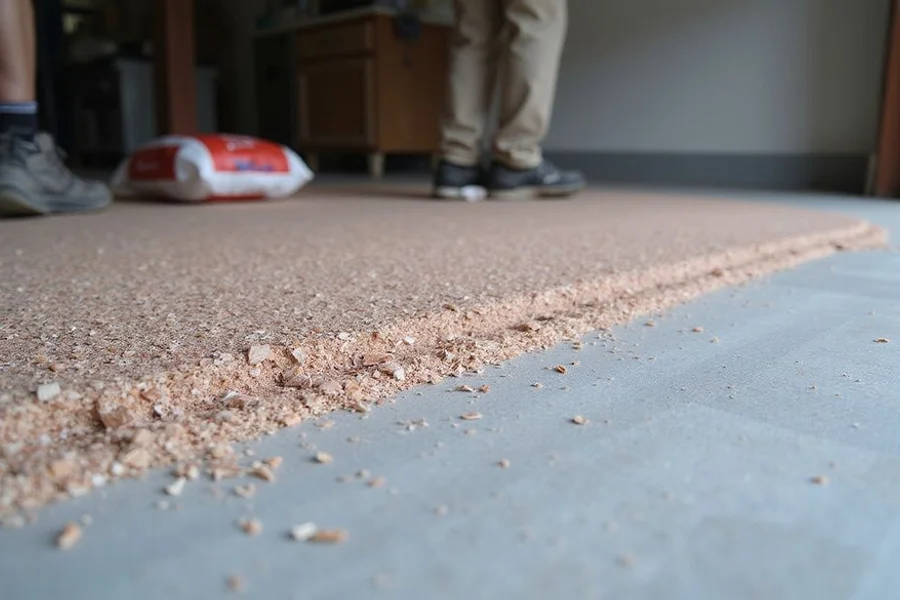
Close-up of vinyl flake broadcast into a garage floor coating

Epoxy is a supporting offer alongside polishing. We recommend it where it genuinely fits the space, such as certain commercial and garage applications — and we tell you when it does not.

What a coating system is made of

Most systems we install are built in layers, each doing a specific job:

  • Primer — bonds to the profiled concrete and, where moisture readings require it, mitigates vapour transmission.
  • Base coat — the body of the system, tinted where a solid colour is specified.
  • Broadcast — vinyl flake or quartz scattered into the wet base for texture, traction, and appearance.
  • Topcoat — the wear layer. A polyaspartic or aliphatic urethane topcoat adds abrasion resistance and, where sunlight reaches the floor, UV stability.

Dry film thickness matters. A system quoted without stating the build is a system you cannot compare against another bid.

Preparation decides whether it lasts

Almost every failed coating we are asked to look at failed at the bond line, not in the middle of the film. That is why preparation is mechanical: grinding or shot blasting the concrete to the surface profile the product data sheet requires, then patching pits, cracks, and spalls before priming.

Moisture is the other common culprit. Central Texas slabs sit on ground that holds and releases water, and vapour driving up through concrete will push a coating off regardless of how well it was applied. We test before we specify, which occasionally means recommending that you do not coat that floor at all.

Garage floors specifically

Garage coatings are the most common residential request we get. A multi-layer flake system with a polyaspartic topcoat handles hot tyres, dropped tools, and the daily grit that comes off a vehicle better than a single-coat product from a big-box store.

What we set out before starting: the exact build, the cure times before foot and vehicle traffic, what the floor will look like where it meets the driveway, and how the coating behaves at the door line where sunlight hits it. Details are in our garage epoxy and polyaspartic guide.

Cost drivers for an epoxy floor

Coating quotes vary for reasons that are easy to miss when comparing headline numbers.

Preparation method. Mechanical grinding or shot blasting costs more than an acid etch and is the reason the floor stays bonded. Any quote that skips it is cheaper for a reason.

Slab repairs. Pits, spalls, and cracks are filled before coating. A pitted garage slab can need meaningful patching.

Moisture mitigation. Where testing shows high vapour transmission, a mitigating primer is required, and it is a real cost that a cheaper quote may have simply ignored.

System build. Number of coats, broadcast density, and dry film thickness all change materials and labour.

Topcoat choice. A UV-stable polyaspartic topcoat costs more than a basic finish coat and is what keeps a sun-exposed floor from ambering.

Coving and detailing. Coved wall junctions, drains, and thresholds are detail work priced separately from open floor.

When do you need epoxy rather than polishing?

Three questions usually settle it. Does something get spilled here that would stain or attack bare concrete? Does the floor-to-wall junction need to be sealed and coved? Is the slab a poor candidate for polishing in the first place?

A yes to any of those points toward a coating. A no to all three, in a space that will be lived in or walked through for years, usually points to mechanical polishing instead — lower long-term maintenance, and nothing that can peel.

Because we install both, the recommendation you get names the system and the reason rather than defaulting to whatever we prefer to sell.

Epoxy or polished concrete?

The honest comparison, since we install both:

ConsiderationEpoxy coatingMechanical polishing
What you getA film bonded to the slabThe slab itself, refined and hardened
Chemical resistanceStrong, system-dependentConcrete remains porous; acids etch
RepairPatch or recoat the affected areaSpot re-polish, often blends in
Failure modePeeling, delamination, bubblingWear and dulling, recoverable by burnishing
Long-term upkeepRecoat cycleCleaning plus periodic burnishing
Best fitGarages, wash-down areas, chemical exposureLiving spaces, retail, offices, warehouses

The longer version, with the trade-offs spelled out, is in polished concrete vs epoxy. If you are weighing the two for the same space, read that before you get quotes — it will change the questions you ask.
Differentiators

Why Choose Us for Epoxy

We name the actual system

You get told what is going down — the base, the broadcast, the topcoat — rather than a generic 'epoxy' label.

Preparation done mechanically

Coatings fail at the bond line. We profile the concrete properly instead of relying on a chemical etch.

Moisture tested, not assumed

Vapour transmission through a slab lifts coatings. Testing first is cheaper than re-doing a floor.

Honest about limits

Exposure, temperature, UV, and chemical limits are stated. No coating is permanent, and we do not claim one is.

Only where it fits

We are a polishing specialist first. We recommend epoxy where it genuinely suits the space, not as a default upsell.

Care guidance that matches

Cleaning advice for the installed system, including what will damage it, handed over at completion.

Process

How Our Epoxy Work Runs

  1. 1

    Assess the slab and the use

    What the space does, what gets spilled on the floor, and whether the concrete can hold a coating in the first place.

  2. 2

    Moisture testing

    Moisture moving up through a slab is the most common cause of coating failure. We test rather than assume.

  3. 3

    Mechanical preparation

    Grinding or shot blasting to the concrete surface profile the system requires. No acid etching, no shortcuts.

  4. 4

    Prime and repair

    Primer suited to the substrate, plus patching of pits, cracks, and spalls so the finished surface is sound.

  5. 5

    Build the system

    Base coat, any flake or quartz broadcast, then the specified topcoat at the stated film thickness.

  6. 6

    Cure and handover

    Cure times respected before foot and vehicle traffic, then care instructions for the specific system installed.

Garage, workshop, or commercial space? Get the right coating named.

Send photos of the slab and how the space is used. An estimator reviews it within 24 business hours.

Finish Library

What Epoxy Looks Like

Illustrative finish and process images. Documented project photography is published in the project library as work is recorded with permission.

Feedback

Feedback on Our Epoxy Work

Illustrative examples of the projects and questions we handle. Verified customer reviews are published only with permission.

“As a commercial GC, finding a flooring trade in Austin that understands mechanical densification and testing standards is rare. Our showroom finished on schedule.”
Travis B. Austin
“Honest and straightforward. They tested our 1980s slab, showed us a sample mockup, and explained why polishing suited our open living space better than epoxy.”
Sarah L. South Congress, Austin
“We removed dated tile in our Barton Creek remodel. The team leveled the uneven slab and delivered a satin cream finish that looks like a high-end gallery.”
David & Michelle R. Barton Creek, Austin
Got Questions?

Epoxy FAQs

What is the difference between epoxy flooring and polished concrete?

Epoxy is a coating applied over prepared concrete — a film on top of the slab. Polishing refines and hardens the concrete itself with diamond abrasives and a densifier. They look different, age differently, and are repaired differently.

Where does epoxy make more sense than polishing?

Spaces that need a non-porous, chemical-resistant, or seamless coved surface: garages, some workshops, plant rooms, and certain back-of-house commercial areas. Where appearance and low long-term maintenance matter more, polishing usually wins.

How long does an epoxy floor last?

It depends on the system, the preparation, and how the space is used. No coating is permanent, and anyone quoting a fixed lifespan for every floor is guessing. We explain what would shorten the life of the specific system we are proposing.

Why is surface preparation such a big deal?

A coating is only as good as its bond to the concrete. Mechanical grinding or shot blasting creates the surface profile the product requires. Poor preparation is the leading cause of peeling and delamination.

What is a polyaspartic topcoat?

A fast-curing topcoat often used over an epoxy base, particularly on garage floors. It adds abrasion and UV resistance and shortens return-to-use time. It is a topcoat choice, not a separate category of floor.

Can epoxy be applied over a slab with moisture problems?

Not without addressing the moisture. Vapour driving up through a slab will lift a coating. We test moisture first and specify a mitigating primer where the readings call for it, or recommend a different approach.

Does epoxy yellow in sunlight?

Many epoxy resins do amber with UV exposure. Where the floor sees sunlight — a garage with the door open, a glazed frontage — a UV-stable topcoat is specified for that reason.

How do I clean an epoxy floor?

Sweep or dust mop regularly and clean with a mild, manufacturer-appropriate cleaner. Avoid abrasive pads and harsh solvents. We hand over guidance for the specific system rather than generic advice.

Still have a question about your floor?

Send slab photos and your approximate floor area. We answer the question whether or not you hire us.

Ask an Estimator
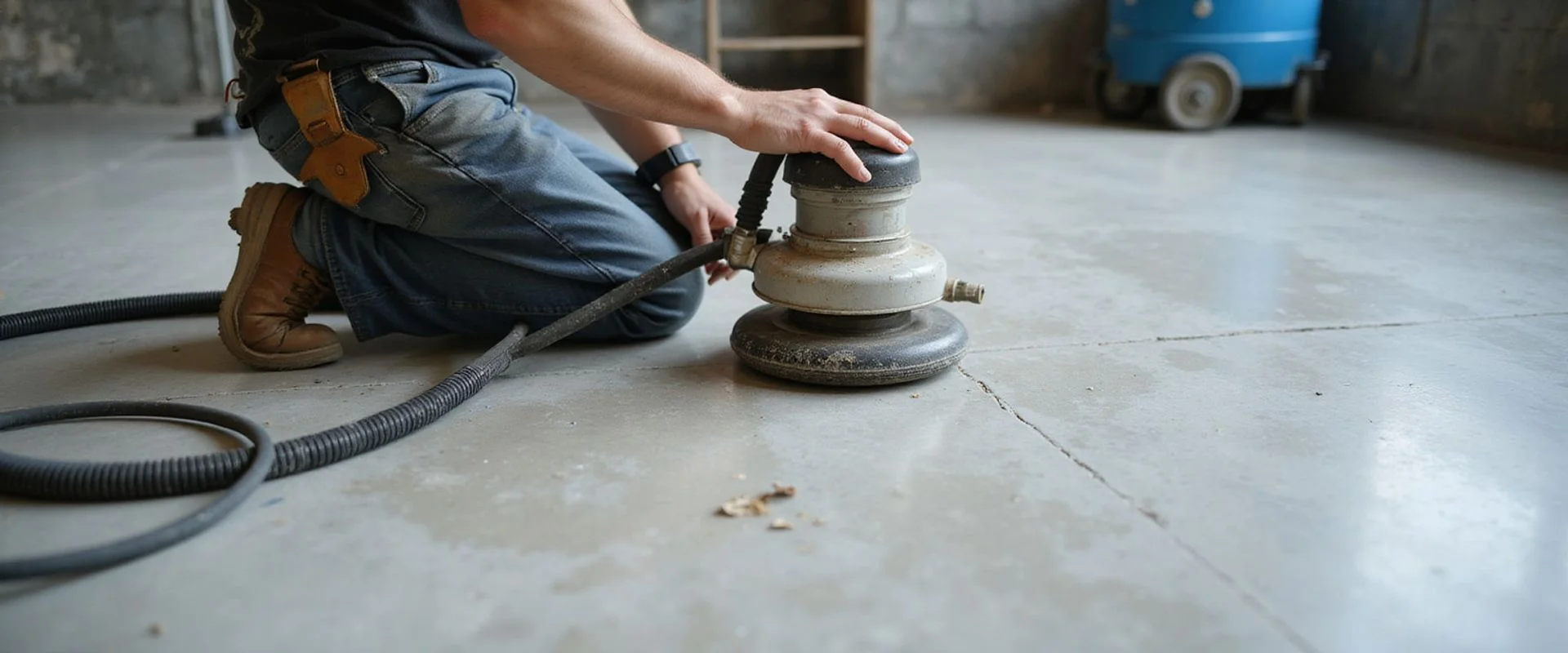
Installer working with a planetary floor grinder on a half-polished Austin concrete slab
Estimator review within 24 business hours

Ready to talk about epoxy?

Send your slab photos and floor area. We assess before we quote, and the scope is written down.

  • Slab assessed before quoting
  • Written scope, clear exclusions
  • Care instructions at handover
(512) 656-1592 Request a Quote