When the slab you have will not give you the floor you want
When a slab isn’t a good candidate for the direct mechanical polishing behind most polished concrete floors in Austin, an overlay can provide a fresh, uniform surface. We explain substrate suitability, intended use, achievable appearance, and — just as important — the limitations.
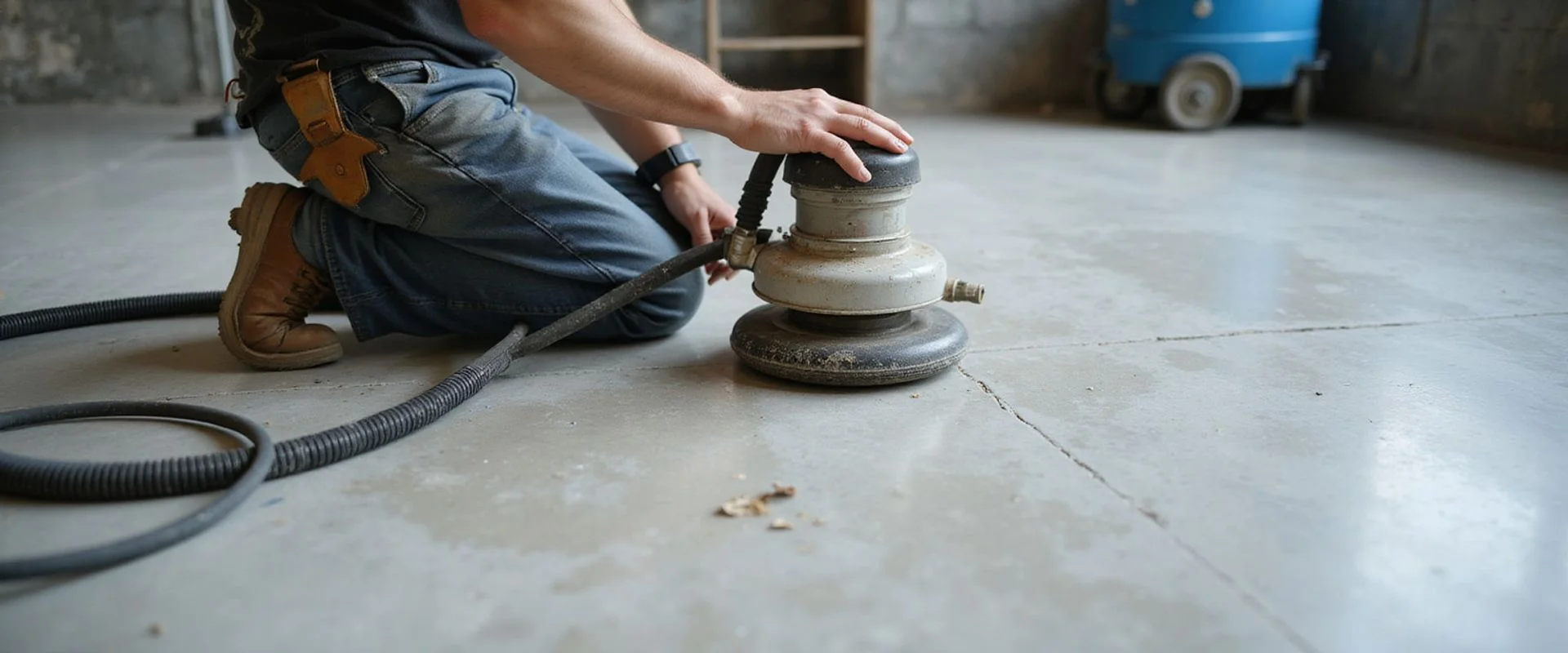
The decision usually arrives at the end of an assessment. Tile comes up, we grind a test area, and what is underneath is a patchwork: a trench from a plumbing repair, a slab extension poured a decade later in a different colour, adhesive staining that will not grind out at the agreed exposure. Polishing that floor is possible. Liking the result is a different question.
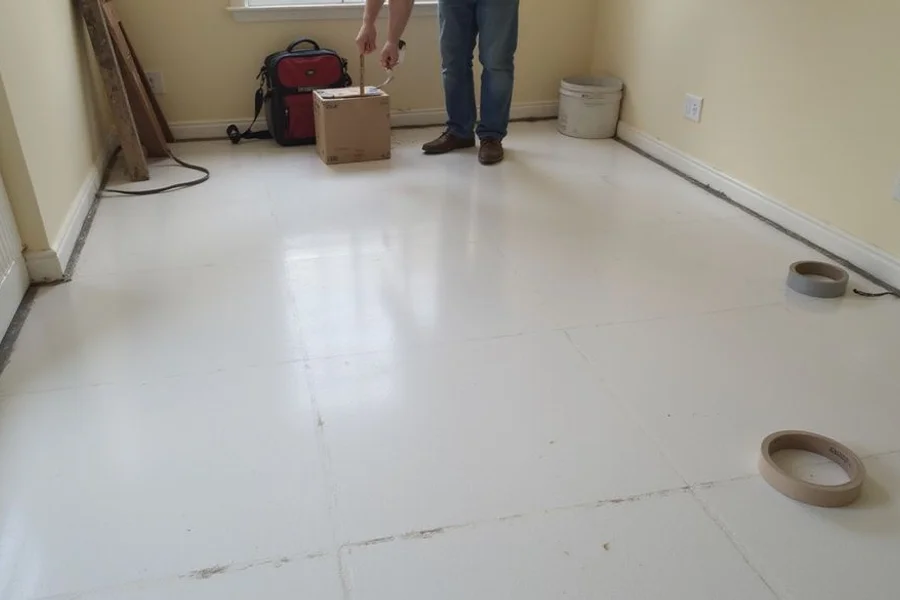
An overlay trades the slab’s history for consistency. That is the whole proposition, and it is a fair one for plenty of Austin properties.
Types of resurfacing, and why the distinction matters
Not every topping can be polished. We identify polishable overlays separately from other resurfacing products so you know what the finished floor can become:
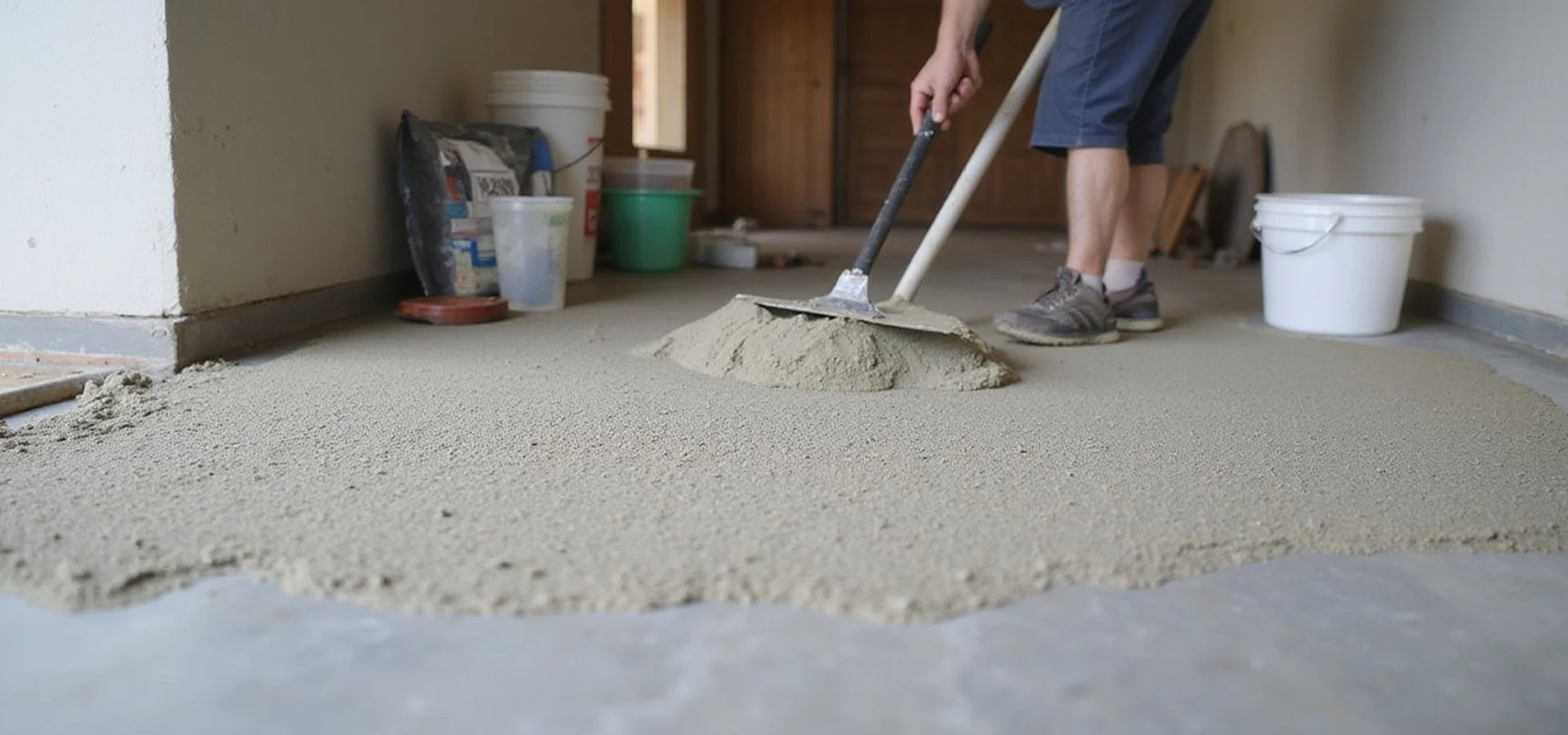
- Polishable cementitious overlay — engineered as a wear surface, placed at a thickness that tolerates grinding, and finished with the same diamond sequence we use on a slab.
- Self-levelling underlayment — designed to be covered by another floor. It levels beautifully and is not built to be the finished surface.
- Microtopping — a thin decorative coat, often trowel-textured. Suited to appearance work, not to deep grinding.
Ask any contractor which of the three they are quoting. If the answer is vague, the finished floor will be too. Our polishable overlays guide sets out the differences in full.
Substrate suitability: what we check first
An overlay is only ever as good as what it is bonded to. Before recommending one we look at:
| Check | Why it matters |
|---|---|
| Soundness and bond strength | A delaminating or crumbling surface cannot hold an overlay. Pull-off testing settles it |
| Moisture | Vapour transmission affects both bonding and the overlay’s cure |
| Existing coatings | Sealers, adhesives, and old paint must come off mechanically first |
| Crack activity | A moving crack can telegraph through; static cracks are treated differently |
| Elevations | Thickness has to work with doors, thresholds, and adjoining floors |
The honest limitations
An overlay resurfaces a floor. It is not a structural product, and it is not a cure for underlying movement. Over Central Texas expansive clay, where slabs deflect seasonally, an active crack can reappear through a topping. Where movement looks significant, a structural review belongs before any finishing decision — we cover the local picture in polishing concrete over Central Texas clay.
There are also practical limits: minimum and maximum installation thicknesses, cure time before grinding, and feather-edge transitions that need planning rather than improvisation.
What an overlay project costs and why
Overlays price differently from polishing, because you are buying a material plus its installation as well as the finishing work.
Substrate preparation. Removal of the existing covering, mechanical profiling, and repairs, all before the overlay goes down.
Material and thickness. The system’s minimum and maximum placement thickness, plus how much levelling the floor needs, determine how much product is used.
Placement conditions. Room size, access for mixing and pumping, and whether a floor can be placed in one continuous operation all affect labour.
Cure time. The overlay has to cure before grinding begins. That is programme time rather than labour, but it affects scheduling and site availability.
Finishing. From there it is priced like a polished slab: exposure, sheen, densifier, and any protective treatment.
The result is usually more than polishing a sound slab and less than replacing a floor — which is precisely the position it occupies in the decision.
When do you need an overlay?
Ask three questions. Has a test grind shown a slab you would not be happy living with? Is the inconsistency structural to the concrete — multiple pours, heavy patching, deep staining — rather than something grinding will resolve? And is uniformity more valuable to you than the original slab’s character?
Three yes answers point to an overlay. Two or fewer usually mean polishing the slab you have is the better and cheaper route, and we will tell you so. Either way, the decision belongs before work starts, which is why the substrate assessment comes first.
Where overlays fit alongside our other work
If your existing slab can be polished directly, that is usually the better and cheaper answer, and we will tell you so — see polished concrete for what direct polishing involves. If the space needs chemical resistance or a seamless coved surface, epoxy is the more appropriate system. The overlay conversation belongs in the middle: a slab worth keeping structurally, but not worth showing.