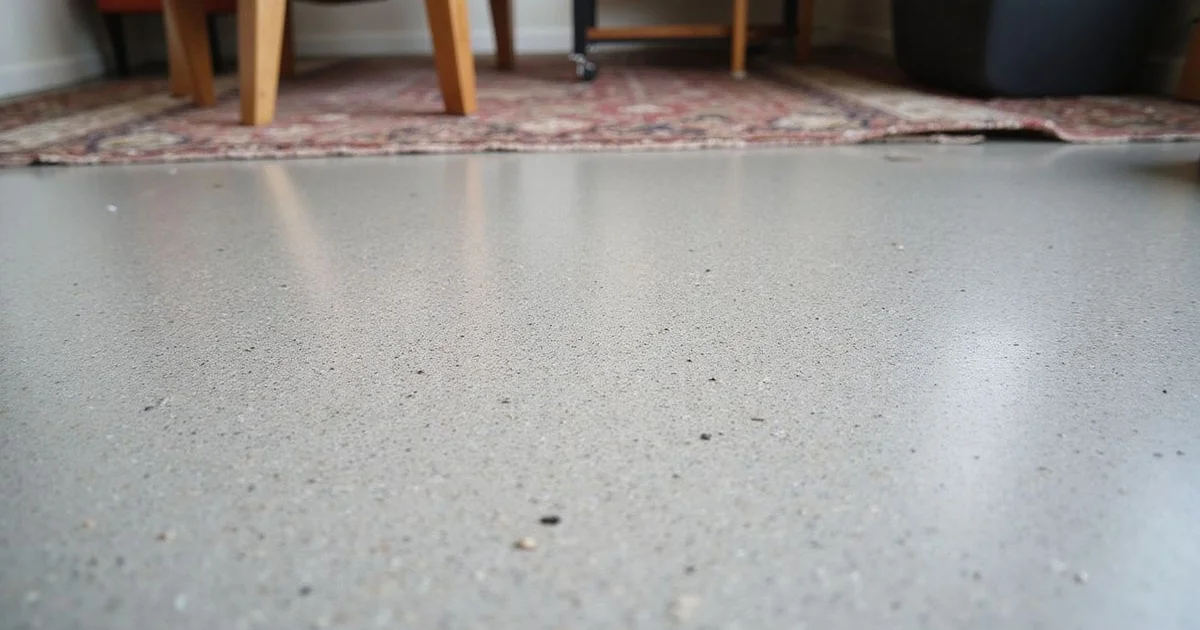
The two decisions behind every polished floor
Almost every disappointing polished concrete floor comes from the same mistake: treating “finish” as a single choice. It is two separate decisions, and they are set at different stages of the work.
Aggregate exposure is how much stone shows through the surface. It is decided by how deep the first grinding passes cut into the slab, and it cannot be changed later without cutting deeper.
Sheen is how reflective the surface looks. It is decided by how far the polishing sequence is taken after the exposure is established, and it is the last thing determined on site.
You can have a matte exposed-aggregate floor or a high-gloss cream floor. Deciding one tells you nothing about the other. Understanding that before you talk to a contractor is the single most useful piece of preparation you can do, and it underpins everything on our polished concrete service page.
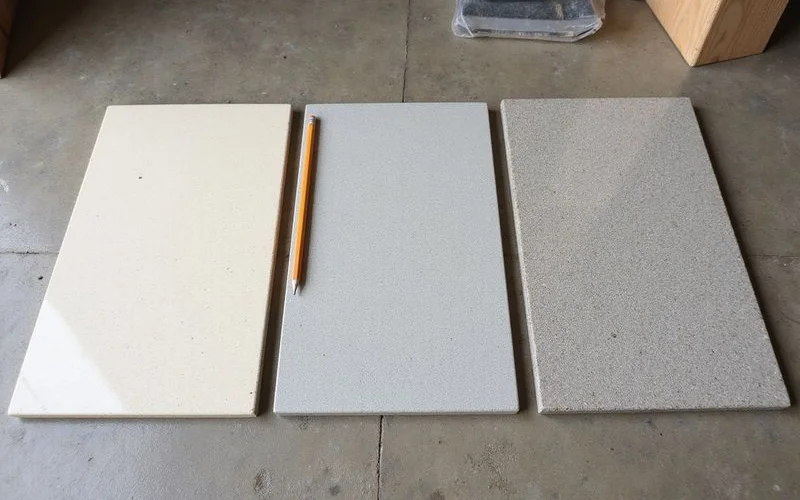
Cream finish
A cream finish takes only the top layer of the slab — the fine paste that rises during finishing — leaving little or no visible stone. The result reads as a smooth, quiet, almost monolithic floor.
It is the most demanding finish to achieve well. Because you are barely cutting into the slab, anything wrong at the surface stays in view: trowel burns, colour variation between truck loads, low spots the grinder reaches unevenly. Cream suits a flat, well-finished pour, which is why it is far more common on new construction than on a renovated slab.
Where it works, it works beautifully: modern interiors, galleries, and spaces where the floor is meant to recede rather than perform.
Salt-and-pepper
Salt-and-pepper exposes sand and small aggregate in a fine, even scatter. It is the workhorse finish, and the one we recommend most often on Austin remodels.
The reason is practical. A consistent fine texture across the whole floor gives the eye something to read other than the slab’s imperfections. Minor colour differences, old patch edges, and slight variation in grinding depth are all less obvious than they would be on cream. It also sits in the middle of the cost range, because the cutting depth is moderate.
For most homeowners uncovering a slab after tile or carpet removal, salt-and-pepper is where the conversation lands.
Exposed aggregate
A deeper cut reveals larger stone in cross-section — the look people usually mean when they say terrazzo-like concrete. It can be striking, and it is entirely dependent on what is actually in your slab.
Two constraints matter. First, the aggregate has to be positioned close enough to the surface to reach without excessive grinding. Second, aggregate distribution in a standard structural pour is not designed to be decorative, so the pattern may be less even than a showroom sample suggests. On a new build you can influence this by specifying the mix before the pour. On an existing slab, you find out by grinding a test area.
Our aggregate exposure guide goes deeper on how grinding depth maps to exposure class.
Choosing a sheen level
Once exposure is set, sheen is a matter of how far the polishing sequence runs:
| Sheen | How it reads | Practical notes |
|---|---|---|
| Matte | Low reflection, soft and flat | Hides dust and footprints best; quietest option |
| Satin | Moderate reflection with visible depth | The common middle ground for homes and offices |
| High gloss | Clear reflections of light and objects | Most dramatic; shows footprints, dust, and scratches soonest |
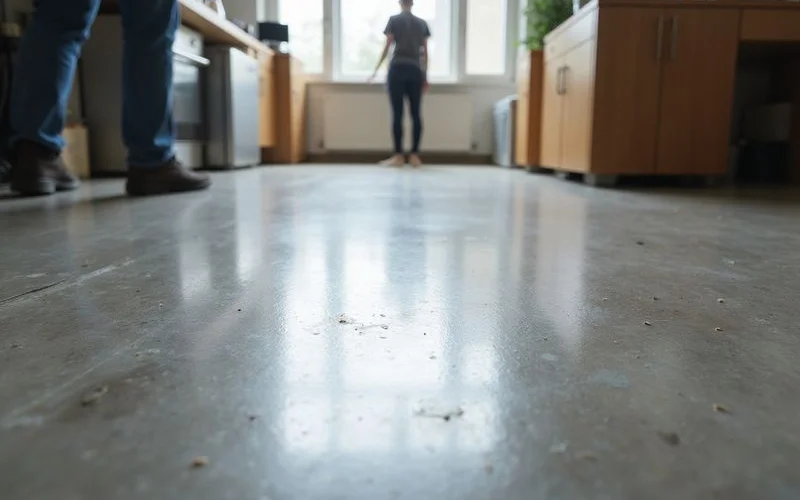
A room-by-room reality check
In a sunlit open-plan space, high gloss shows every footprint by mid-morning. That is not a defect, it is physics. If nobody in the household enjoys daily dust mopping, satin is the kinder choice.
Why a grit number is not a specification
You will see floors advertised as “polished to 1500 grit”. On its own that tells you very little. The final appearance depends on the hardness of your concrete, whether a densifier was used and at what stage, how consistently each grit step was completed, and what exposure the floor was cut to first.
Two contractors can both run to the same final grit and hand over noticeably different floors. This is why a proper specification names the aggregate exposure class and the appearance level, backed by an approved sample or mockup, rather than relying on a number alone.
Colour is a third, separate decision
Dyes and stains can be introduced during the polishing process, adding tone without changing exposure or sheen. Colour is often used to even out tonal variation on an older slab, or to warm up a grey floor in a room that feels cold.
It behaves differently from paint: the colour sits within the concrete rather than on it, so it wears with the floor rather than peeling off it. The distinction between colouring and refining the surface is covered in polished concrete vs stained concrete.
How each finish behaves in an Austin home
Appearance is only half of the decision. How a finish lives with a household is the other half.
Cream at high gloss is the most demanding combination, and the most striking. Every footprint, every speck of dust, and every pet hair shows against an unbroken reflective surface, particularly when morning light rakes across it. Households that enjoy a daily dust mop love it. Others find it exhausting within a month.
Salt-and-pepper at satin is the combination we specify most often, and for good reason. The fine texture gives the eye something to read, so dust and minor marks disappear into it. The satin sheen still carries depth and light without behaving like a mirror.
Exposed aggregate at matte reads as the most material, almost stone-like. It hides everyday life better than any other combination and asks the least of you. What it gives up is the sense of depth a higher sheen produces.
Central Texas adds one local factor: fine dust. It arrives through doors and windows most of the year and settles visibly on a reflective floor. That is not an argument against gloss, but it is worth knowing before choosing it for a room with large openings to the outside.
How to actually decide
Look at samples under the light in your own room, at the time of day you use it most. Then ask for a ground test area on your own slab before committing — two square feet of your own concrete settles arguments that a thousand photographs will not.
Bring that decision to an estimator with your floor area and property use and the rest of the quote becomes straightforward.