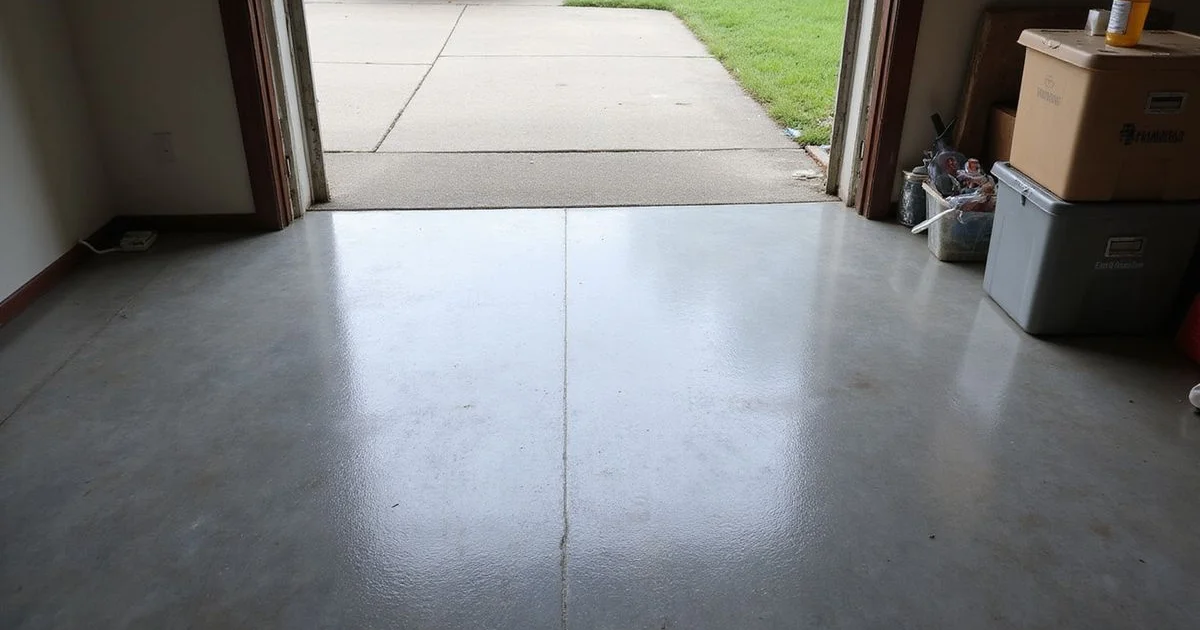
One refines the slab, the other covers it
That single sentence resolves most of the confusion. Mechanical polishing grinds, hones, and densifies the concrete you already have — the finished surface is the slab itself. Epoxy is a coating system bonded onto prepared concrete — the finished surface is a film sitting on top.
Everything else follows from that difference: how they look, how they age, how they are repaired, and how they fail.
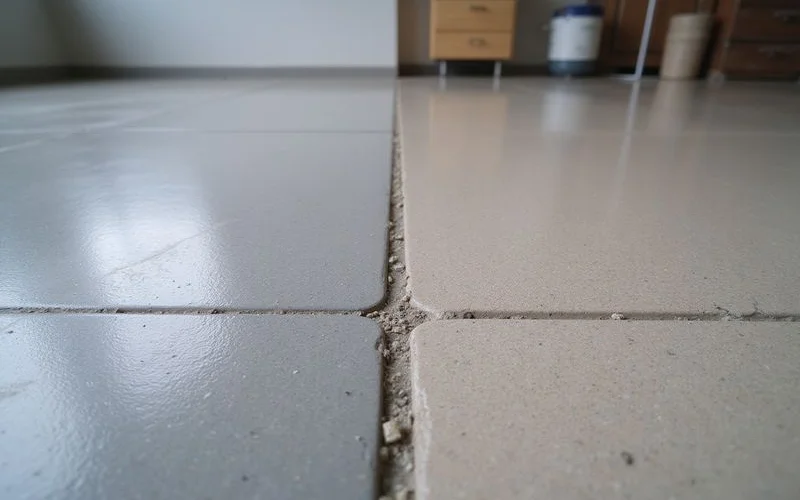
Side by side
| Consideration | Polished concrete | Epoxy coating |
|---|---|---|
| What you are buying | The refined slab | A bonded film over the slab |
| Appearance | Natural aggregate, variation, depth | Uniform colour, flake or quartz texture |
| Colour options | Dye or stain within the concrete | Almost any colour, plus decorative broadcast |
| Chemical resistance | Concrete stays porous; acids etch | Strong, varies by system |
| Moisture tolerance | Vapour passes through; not a problem | Vapour can lift a coating; testing required |
| Typical failure mode | Gradual dulling and wear | Peeling, bubbling, delamination |
| Repairability | Spot re-polish, usually blends | Patch or recoat; blending is harder |
| Ongoing upkeep | Cleaning plus periodic burnishing | Cleaning, eventual recoat cycle |
| UV exposure | Unaffected | Many resins amber without a UV-stable topcoat |
| Best-fit spaces | Living areas, retail, offices, warehouses | Garages, workshops, wash-down and chemical areas |
Appearance: variation versus uniformity
Polished concrete looks like concrete, refined. Aggregate distribution, colour shifts between pours, and the slab’s history all remain visible to some degree. People choose it because it is a natural material with depth, and they accept — usually enjoy — the variation.
Epoxy looks manufactured, because it is. A solid-colour or flake system delivers uniformity that no slab can match. If the goal is a consistent, colour-matched floor across a space with a chequered history, a coating gets there directly.
Preparation: where coatings win or lose
Polishing is its own preparation — the grinding sequence is the work. Epoxy demands separate, thorough preparation before anything is applied: mechanical profiling by grinding or shot blasting to the concrete surface profile the product data sheet specifies, plus patching and priming.
Moisture is the crucial extra step. Vapour moving up through a slab can push a coating off, and Central Texas slabs sit on ground that holds moisture. Testing before specifying is not optional, and any epoxy quote that does not mention it deserves a question.
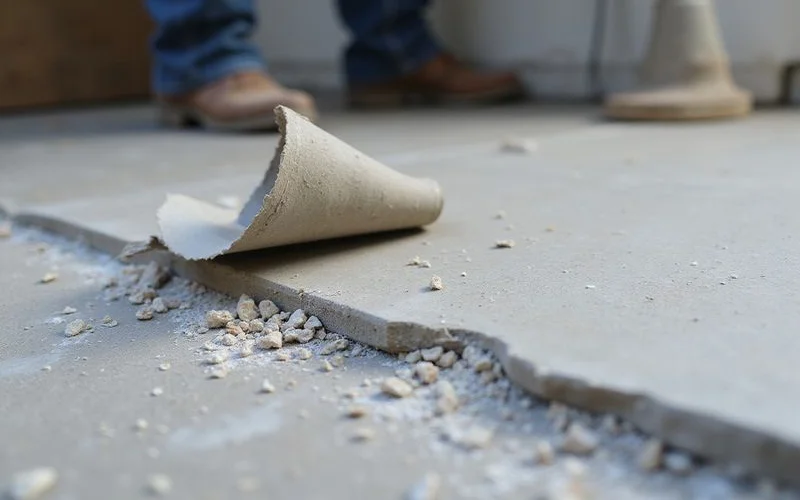
How they age differently
A polished floor gets duller. An epoxy floor eventually reaches a point where it needs recoating or removal. One degrades gracefully; the other has a service life with an end.
Cost over time, not just at installation
Upfront figures for the two systems can land close together, especially once you count the preparation that a coating needs. The difference shows up over a decade.
A polished floor’s ongoing cost is cleaning plus occasional burnishing, with re-polishing at long intervals if it is heavily used. An epoxy floor’s ongoing cost includes an eventual recoat, and the cost of that recoat depends on whether the existing system can be scuffed and overcoated or has to come off entirely.
Neither is universally cheaper. What matters is knowing which curve you are buying. Our cost guide covers the variables on the polishing side.
Where each genuinely fits
Choose polishing when: the space is a living area, retail floor, office, showroom, restaurant, or warehouse; you like natural material variation; the slab is a reasonable candidate; and you want minimal long-term maintenance.
Choose epoxy when: the space needs chemical resistance or a non-porous, seamless surface; there is a garage or workshop environment with vehicle fluids and hot tyres; a coved wall junction is required; or you need a specific uniform colour the concrete cannot provide.
Choose neither when: the slab has active structural movement and needs a structural answer first, or when the space genuinely wants a softer, warmer floor for comfort reasons.
Three real scenarios and the answer
“We are remodelling an open-plan living area and kitchen.” Polishing, almost always. The slab is already there, the space wants a natural material, and the long-term maintenance story is far better. The only reason to reconsider is a slab in genuinely poor condition — in which case a polishable overlay, not epoxy, is the alternative.
“We are fitting out a workshop with a vehicle bay and a parts washer.” Epoxy. Chemical resistance, a non-porous surface, and the ability to cove the coating up the wall at junctions all matter more here than material character. Polishing would leave a porous floor in an environment that will stain it.
“We run a distribution warehouse with forklift traffic.” Polishing, with densification and semi-rigid joint filling. Coatings in this environment have to survive point loading from hard wheels and are expensive to maintain across large areas. A densified polished slab handles it and repairs locally. The detail is in our warehouse polishing guide.
The pattern: coatings win where the floor has to resist something specific. Polishing wins where the floor has to live a long time with normal use.
Questions that settle it for your space
- Does anything get spilled here that would stain or attack concrete?
- Does the junction between floor and wall need to be sealed and coved?
- Is the slab a reasonable candidate for polishing in the first place?
- Does sunlight reach the floor, and would ambering matter?
- Who maintains it, and will they follow a recoat schedule or a cleaning routine?
Two or three clear answers usually make the choice obvious without anyone needing to advocate for a product.
If you are still deciding
Send the room’s use, floor area, and slab photos. Because we install both, we have no particular stake in which you choose, and the recommendation you get back will name the system and the reason. When the honest answer is that a third option fits better — a polishable overlay, for instance — we say that too.