Two floors that can look identical on day one
A grind-and-seal floor and a mechanically polished floor can be almost indistinguishable in a photograph. They are built differently, they behave differently in year three, and they are maintained differently for their whole life.
The distinction comes down to where the sheen lives.
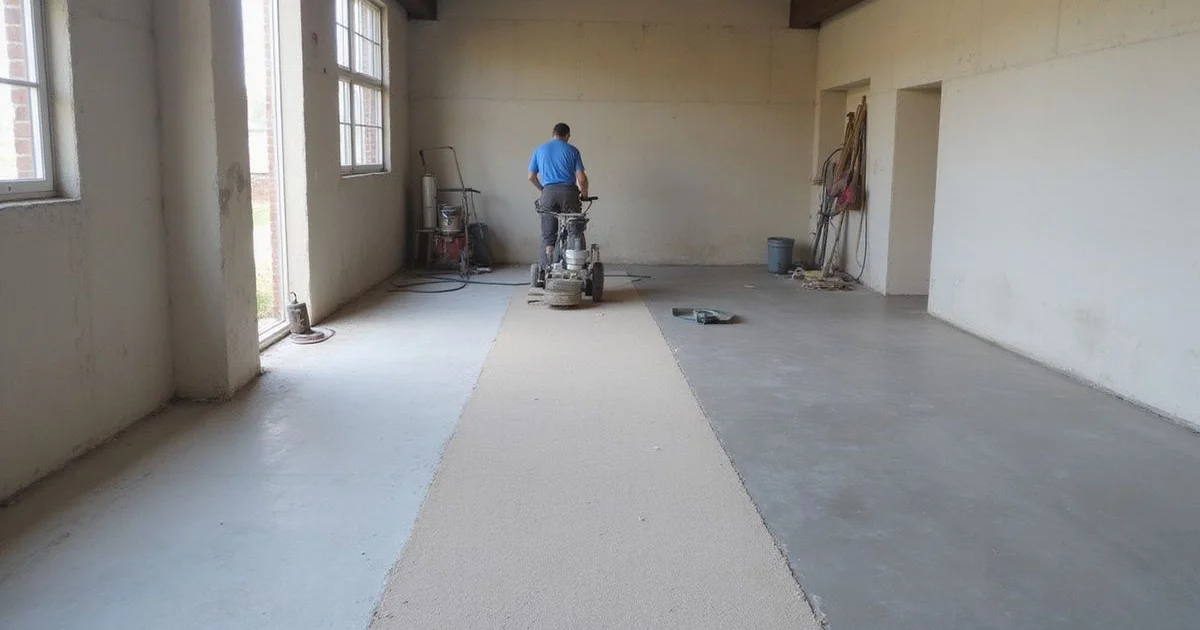
Mechanical polishing grinds the slab, hardens it with a penetrating silicate densifier, then refines it through progressively finer diamond abrasives. The shine is the concrete itself, made smooth and dense enough to reflect light.
Grind and seal grinds the slab to the desired exposure, then applies a topical sealer — often acrylic, urethane, or epoxy-based. The shine is the sealer film.
How they compare
| Consideration | Mechanical polishing | Grind and seal |
|---|---|---|
| Source of sheen | The refined slab | A topical sealer film |
| Slab requirements | Needs reasonably sound, hard concrete | More tolerant of softer or poorer slabs |
| Upfront cost | Higher — more steps | Lower — fewer passes |
| Maintenance | Cleaning plus periodic burnishing | Cleaning plus periodic re-coat |
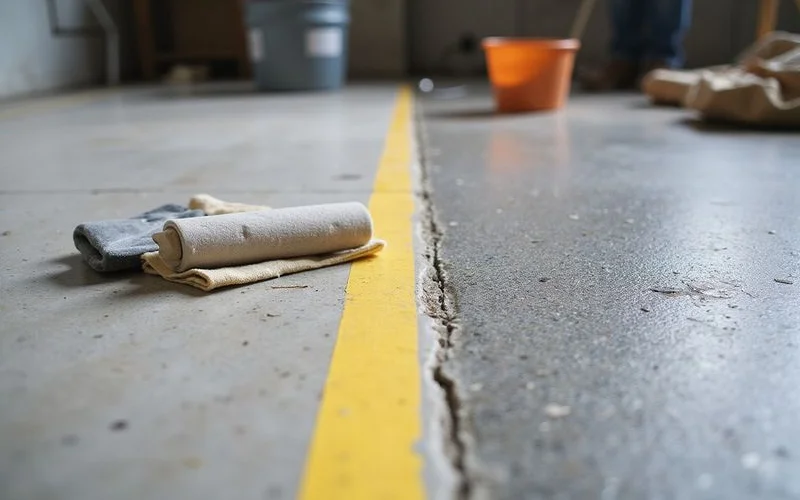
| Scratch behaviour | Marks the concrete; often burnishes out | Marks the sealer; visible until re-coated |
| Repairs | Spot re-polish blends reasonably | Patch re-coating can show as a difference |
| Breathability | Vapour passes through | Some sealers trap moisture and can blush |
| Longest-term outlook | Re-polish decades later | Recurring re-coat cycle |
When grind and seal is genuinely the right call
We install both, and there are slabs where sealing is the better recommendation:
Soft or friable concrete. If the surface will not take a polish — it dusts, it will not densify properly, the clarity never arrives — a sealer can deliver an attractive floor where polishing would disappoint.
Heavily variable slabs. A sealer, particularly a tinted one, can even out a floor with patchy colour in a way that polishing will not.
Budget-constrained projects with a short horizon. A tenant fit-out with a five-year lease may reasonably choose lower upfront cost and accept the re-coat cycle.
Spaces where a sealer’s properties are wanted. Some sealers offer stain resistance that bare polished concrete does not, which occasionally matters more than longevity.
What to watch out for
The main problem with grind and seal is not the system — it is how it is sold. Because the two finishes look similar when new, “polished concrete” is regularly used to describe a ground and sealed floor. Buyers then expect polished-concrete maintenance and are surprised when traffic lanes scuff two years in.
The question that settles it
“Is the sheen coming from the concrete or from a coating on top?” Ask it directly. A straight answer tells you which product you are buying and which maintenance cycle comes with it.
Maintenance in practice
A polished floor is dust mopped, damp cleaned with a neutral-pH product, and burnished occasionally when traffic lanes dull. There is no coating to strip.
A sealed floor is cleaned similarly but must be maintained with the sealer in mind: avoid solvents that attack it, avoid abrasive pads that scratch it, and plan for re-coating when wear becomes visible. Re-coating means cleaning, possibly scuffing, and applying fresh product — a scheduled project rather than a maintenance task.
Our maintenance guide covers the polished routine in full.
The ten-year view
Think about the two systems as different payment schedules rather than different prices.
Mechanical polishing front-loads the cost. More steps, more tooling, more time on site. After that the floor asks for cleaning and occasional burnishing, and there is no scheduled expenditure on the horizon. If it wears after many years it is re-polished — localised, not wholesale.
Grind and seal spreads the cost. Lower upfront, then a re-coat when the sealer wears through in traffic lanes. Each re-coat means preparing the existing sealer, applying fresh product, and taking the space out of use while it cures. In a busy commercial setting that cycle can arrive several times in a decade.
Neither is wrong. A five-year lease with an unknown future favours the lower upfront cost. An owner-occupied home or a long-term facility usually favours the front-loaded option.
How to tell what you already have
If you have inherited a shiny concrete floor and are not sure which system it is, three checks give you a good idea:
Scratch test in a hidden corner. A coin drawn firmly across a sealed floor leaves a mark in the film. On a polished floor it marks the concrete itself, if at all, and looks quite different.
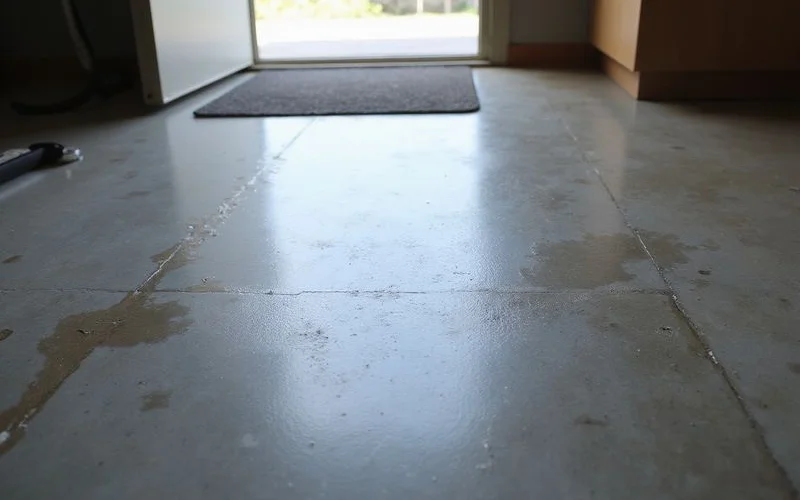
Water test. Drop water on the surface. A sealed floor usually beads it. A polished floor may darken slightly where water sits, because the concrete is still marginally porous.
Look at the edges and thresholds. Sealers build up slightly at edges and can show a lip or a different sheen where they stop. A polished floor runs out evenly.
Knowing which you have tells you what maintenance it needs, and whether the dullness you are seeing calls for burnishing or re-coating.
How we decide on your slab
The assessment decides it, not a preference. We check surface hardness, aggregate depth, and whether the concrete will densify properly. If it will, mechanical polishing gives the better long-term floor and we say so. If it will not, sealing is the honest recommendation and we explain the re-coat commitment that comes with it.
When neither suits — a slab too damaged or too inconsistent for either approach to look right — a polishable overlay creates a surface that will. The detail on slab suitability is in can existing concrete be polished.