What a polishable overlay is for
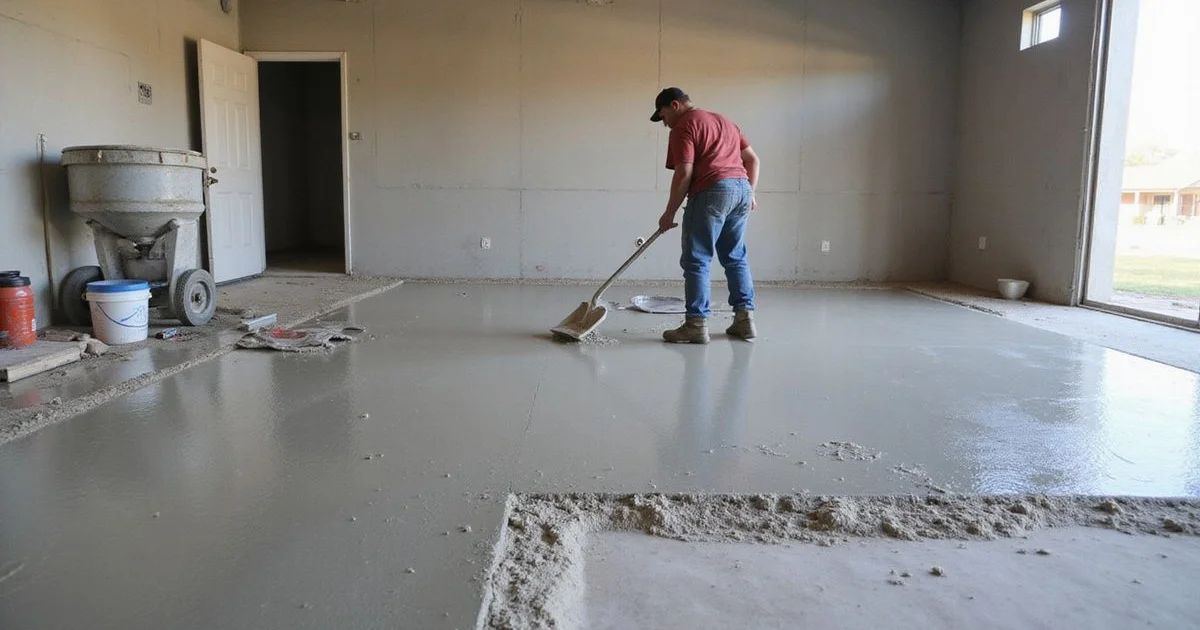
A polishable overlay is a cementitious topping placed over prepared concrete and engineered to be ground and polished like a slab. It exists for one situation: when the concrete you have cannot produce a floor you would be happy with.
That is the honest framing on our concrete overlays page too. An overlay is not an upgrade to polishing — it is an alternative route to a polished-looking floor when direct polishing will disappoint.
Polishable overlay versus other resurfacing
The category confusion here costs people money, so it is worth being precise:
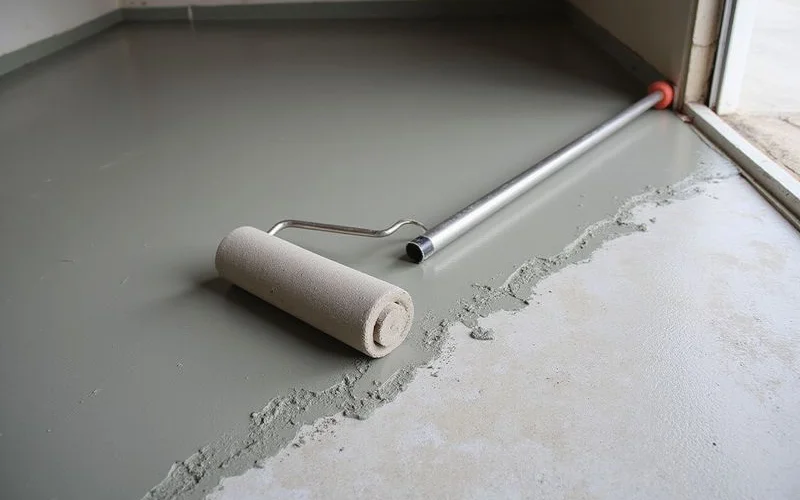
Polishable overlay. Manufactured as a finished wear surface. Placed thick enough to tolerate grinding, formulated to develop the surface hardness that polishing requires. This is the only one that can be ground and polished to a proper finish.
Self-levelling underlayment. Designed to create a flat plane beneath another floor covering. Excellent at levelling, not formulated to be the finished surface, and generally too soft to polish well.
Decorative microtopping. A thin trowel-applied coat used for texture and appearance. Too thin for meaningful grinding.
Ask any contractor proposing an overlay which of the three they are quoting, and whether the manufacturer lists it as polishable. A vague answer predicts a vague result.
When an overlay is the right recommendation
- The slab is heavily patched, trenched, or has multiple pours at different times
- Surface concrete is soft, dusting, or will not densify adequately
- Staining or contamination is too deep to grind out at an acceptable exposure
- Uniformity matters more to the client than the slab’s natural character
- A previous coating has damaged the surface beyond economical recovery
The assessment that leads to this conclusion is described in can existing concrete be polished.
Substrate suitability: what gets checked
| Check | Why it matters |
|---|---|
| Soundness | A delaminating or crumbling surface cannot support a bonded overlay |
| Bond strength | Pull-off testing gives a real answer where there is doubt |
| Moisture | Vapour transmission affects bonding and the overlay’s cure |
| Existing coatings | Sealers, adhesives, and paint must be mechanically removed |
| Crack activity | Active cracks can telegraph through the new surface |
| Floor elevations | Added thickness has to work with doors and transitions |
What it looks like once polished
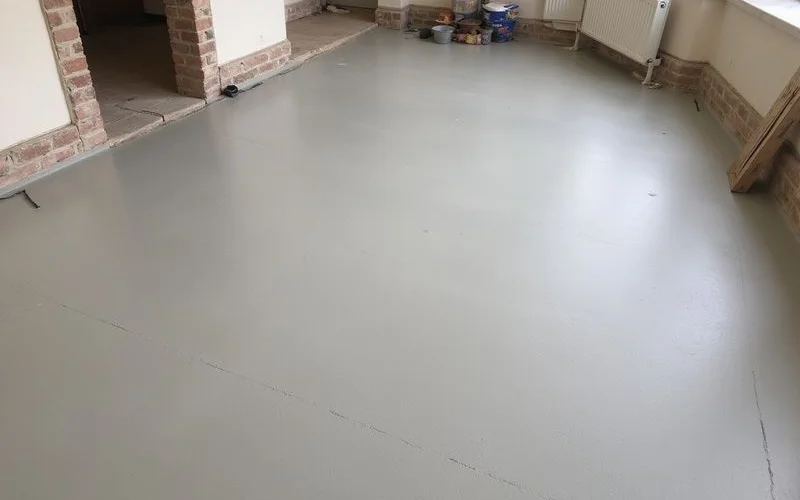
Very consistent. An overlay is a manufactured material placed in a controlled way, so colour and texture are far more uniform than a structural slab poured decades ago for a different purpose.
Whether that is a benefit depends on taste. People who want polished concrete for its natural variation sometimes find an overlay too even. People who want a calm, consistent floor across a space with a chequered history find it exactly right. Some systems allow decorative aggregate to be included, which introduces deliberate visual interest rather than accidental character.
The limits, stated plainly
An overlay resurfaces a floor. It does not stabilise one.
If the slab beneath is moving — and over Central Texas expansive clay, plenty are — that movement continues after the overlay is placed and can reappear through it.
Other practical limits: minimum and maximum placement thickness per the system; cure time before grinding can begin; feather-edge transitions at doorways that need planning rather than improvisation; and the added floor height itself, which affects thresholds, door clearances, and junctions with adjoining floor finishes.
Where movement looks active, a structural review belongs before any finishing decision — see polishing concrete over Central Texas clay.
What the installation actually looks like
Useful to know, because an overlay project runs differently from a straight polish.
Preparation day. The existing floor covering, adhesive, and any coating come off. The substrate is mechanically profiled — ground or shot blasted — and vacuumed thoroughly. Cracks are treated according to their behaviour, and pits or spalls are filled.
Priming. The system’s bonding primer is applied to the prepared substrate. Timing matters: most primers have a window during which the overlay must be placed.
Placement. Self-levelling material is mixed in batches and poured, then spread and smoothed. Continuity matters, so a room is usually placed in one operation rather than stopped and restarted. Feather edges at doorways and transitions are worked as the material goes down.
Curing. The overlay needs its specified cure before grinding can start. This is dead time on site, and it belongs in the programme rather than arriving as a surprise.
Grinding and polishing. From here it runs like a slab: cut to the agreed exposure, densify, then refine through the polishing sequence to the specified sheen.
Expect the whole sequence to take longer than polishing an existing slab, because the cure sits in the middle of it.
Care once it is down
Much like a polished slab: dust mopping, neutral-pH damp cleaning, no waxing or stripping, and prompt cleanup of acidic spills. The one difference is that the wear surface is a specified product, so we hand over care instructions written for that system rather than generic concrete advice.
If you have a slab you suspect is a poor polishing candidate, send photographs and the room’s approximate area. The answer you get back will say whether direct polishing is realistic — and if it is, we will tell you that, because it is usually the simpler and cheaper route.