The routine, in one paragraph
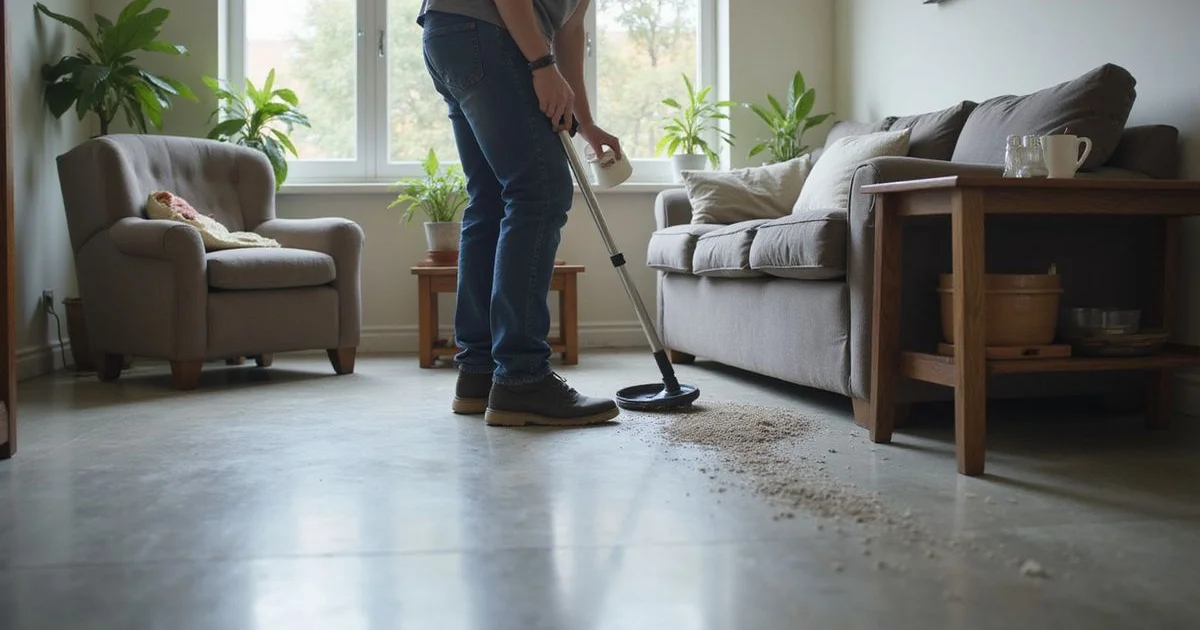
Dust mop most days. Damp mop with clean water or a neutral-pH cleaner when the floor needs it. Wipe spills promptly, particularly anything acidic. Do not wax, do not strip, do not use vinegar. That is the whole routine for most homes, and it is one of the strongest arguments for mechanical polishing over a coated floor.
Daily and weekly care
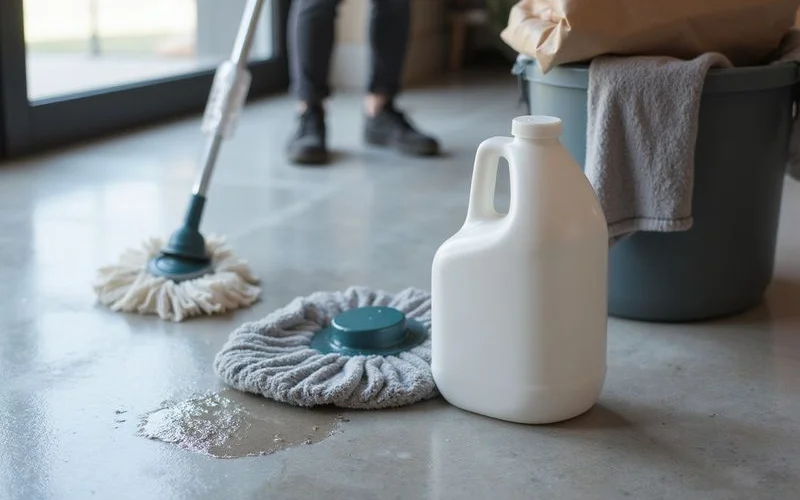
Dust mopping is the important habit. Grit tracked in from outside is abrasive. Left on the floor and walked over, it acts like fine sandpaper, and over years that is what dulls a polished surface more than anything else. A microfibre dust mop takes a couple of minutes per room.
Damp cleaning uses clean water or a neutral-pH cleaner diluted per the label. Change the water when it goes grey — mopping with dirty water redistributes the grit you just collected. In a home, once a week is plenty for most rooms; kitchens and entries may want more.
Entry mats do more good than any product. Most of the grit that reaches a floor arrives on shoes in the first two metres.
Products to use and avoid
| Use | Avoid |
|---|---|
| Neutral-pH concrete cleaner | Vinegar, lemon, and other acids |
| Clean water | Bleach and ammonia on a regular basis |
| Microfibre mops and pads | Abrasive scouring pads |
| Soft-bristle brooms | Wax, polish, and “shine restorer” products |
| Manufacturer-specified conditioners | Strippers intended for coated floors |
The wax point matters. Products sold to restore shine on vinyl or coated floors leave a film on polished concrete that attracts dirt, clouds the clarity you paid for, and eventually has to be removed. The sheen on a polished floor comes from the refined concrete, not from a topical product.
Spills, etching, and what actually stains
Concrete is porous, even when densified and polished. Two different things can happen when something is left on it:
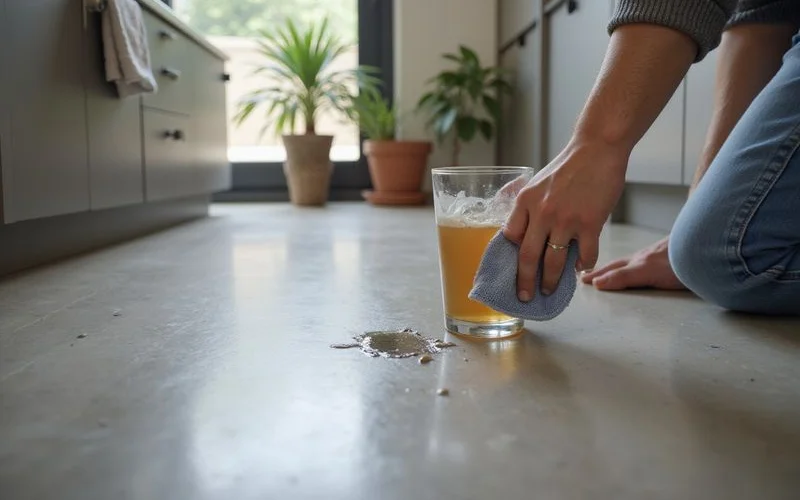
Etching is a chemical reaction. Acids — wine, citrus juice, tomato, some cleaning products — dissolve a little of the cement paste, leaving a dull mark that is physically different from the surrounding surface. Wiping it up promptly prevents it; once etched, the area needs re-polishing rather than cleaning.
Staining is absorption. Oils, dyes, and dark liquids can soak in if left. A protective treatment reduces absorption and buys you time, but no treatment makes concrete stain-proof, and we will not describe one as such.
The rule that prevents most problems
Wipe it up now, not later. Prompt cleanup handles almost every spill a household produces; delay is what turns a spill into a repair.
When professional attention is due
Watch for three signals:
- Traffic-lane dulling. Where people actually walk starts looking flatter than the rest of the room. High-speed burnishing usually restores it.
- Water soaking in faster than it used to. If water darkens the surface quickly instead of beading or sitting, the surface may be ready for re-densification or re-treatment.
- Visible scratching or etch marks. Light scratches often polish out. Deeper damage may need spot refinishing, which will not always vanish completely.
None of these are emergencies. Polished concrete degrades gracefully — it dulls rather than failing — which is the opposite of how a coating behaves when it reaches the end of its life.
A routine that fits real life
Written as a schedule rather than a list of principles.
Every day or two. Dust mop the rooms that get walked through — entries, kitchen, hallway. Two minutes with a microfibre head. This is the task that protects the finish; everything else is secondary.
Weekly. Damp mop with clean water or a neutral-pH cleaner. Change the water when it greys. Pay attention to the strip inside each external door, where grit concentrates.
As it happens. Wipe spills, especially anything acidic. This is not fussiness — acid etching is the one form of damage a household can cause in seconds and cannot clean away afterwards.
Seasonally. Check entry matting, look at the floor from a low angle with light raking across it, and note whether traffic lanes are starting to flatten. Early dulling is easy to correct.
Every few years, or as needed. Ask for a professional assessment if the sheen no longer responds to cleaning. In a home that interval is usually long.
Protecting the floor from what scratches it
Grit is the main enemy, and it mostly arrives on shoes and under furniture.
Felt pads under chair and table legs, checked occasionally because they collect grit themselves. Mats at every external door, sized to catch two or three steps. Lifting furniture rather than dragging it. A doormat outside as well as in, if the entry sees garden traffic.
None of that is unique to concrete — it is the same advice that protects timber — but a polished floor rewards it visibly.
Commercial floors are a different schedule
A retail or warehouse floor carries in a week what a home carries in a year. Those floors need a written daily, weekly, and periodic routine, usually involving an auto-scrubber and scheduled burnishing. That schedule is set out separately in our commercial polished concrete maintenance schedule. Where a floor has already lost sheen or picked up damage, our guide to common polished concrete problems covers what is repairable.
If your floor has dulled and you are not sure whether it needs burnishing, re-densification, or a full re-polish, send photos and we will tell you which — including when the honest answer is that it needs nothing yet.