Start with the diagnosis, not the fix
Polished concrete rarely fails outright. It degrades gradually, which is good news, but it also means owners often cannot tell whether a floor needs a clean, a burnish, a spot repair, or a full re-polish. Those are four very different jobs with four very different costs.
This guide walks through the five problems we are asked about most, what causes each, and what a mechanical polishing contractor can realistically do about it.
1. Dullness
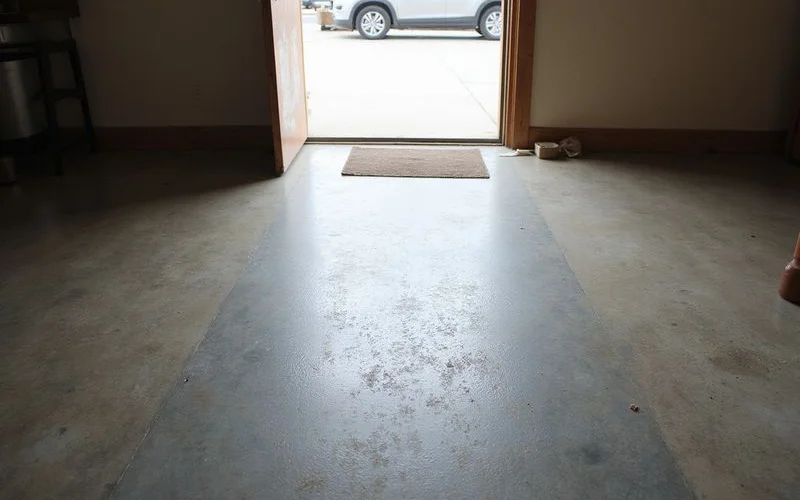
What it looks like: The floor has lost its clarity, usually first in traffic lanes and around doorways, while edges and under-furniture areas still look right.
Likely causes: Abrasive grit walked across the surface day after day; cleaning with the wrong chemical; or a topical “shine restorer” product leaving a film that clouds the finish.
What fixes it: High-speed burnishing with the appropriate pad usually restores the sheen. If a film is present, it has to come off first. If the surface has genuinely worn, a light re-polish of the final grits brings it back.
2. Scratches
What it looks like: Fine lines catching the light at a low angle, or isolated deeper gouges from dragged furniture or dropped tools.
Likely causes: Grit under furniture feet, unprotected chair legs, equipment dragged across the floor.
What fixes it: Light scratching often disappears with burnishing or a partial re-polish. A deep gouge is a different problem: to remove it you have to cut the surrounding area down to its depth, which can leave a subtle dish in the floor. Spot refinishing is usually the pragmatic compromise, accepting that the repair may be visible up close.
3. Etching
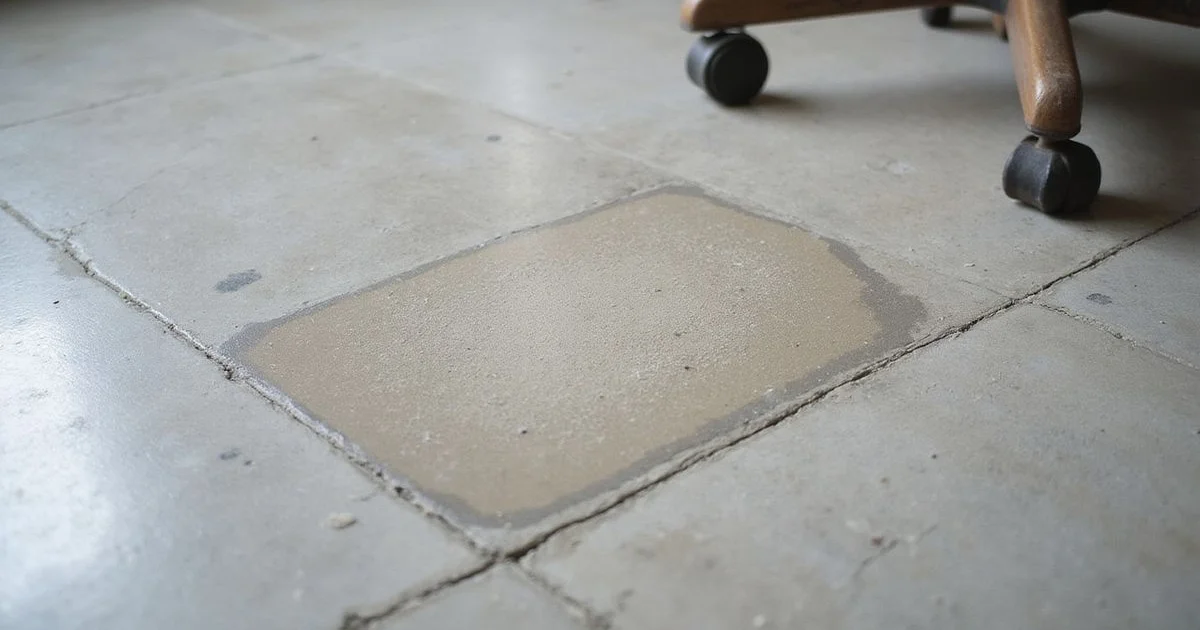
What it looks like: A dull patch with a distinct outline, often matching the shape of a spill.
Likely causes: Acid. Wine, citrus, tomato, some cleaning products, and certain pet accidents dissolve a little cement paste on contact. This is a chemical change, not dirt.
What fixes it: Re-polishing the affected area. There is no cleaner that reverses etching, because there is nothing sitting on the surface to remove. Prevention is prompt wiping — the routine in our maintenance guide.
4. Stains
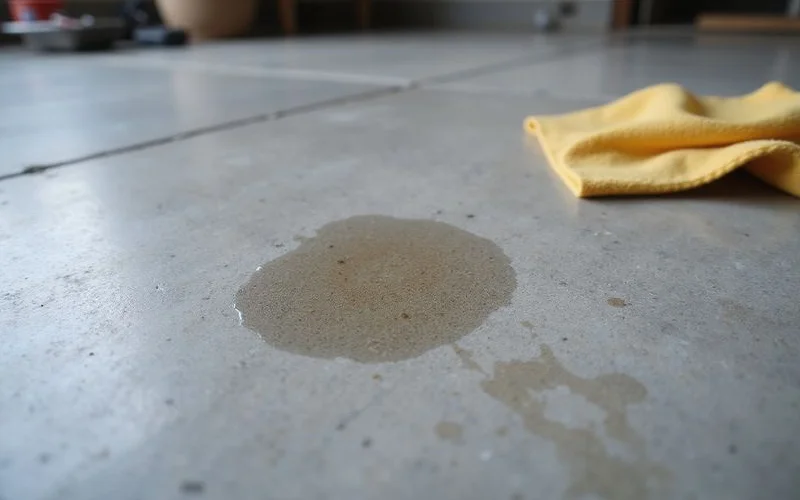
What it looks like: Discolouration that has soaked in rather than sitting on the surface. Oil, grease, dye, and rust are the usual culprits.
Likely causes: Absorption into a porous material. Densification and protective treatments slow this down; they do not stop it.
What fixes it: Poultice treatments can draw out some absorbed contaminants. Grinding removes the affected surface layer if the stain is shallow. If it has penetrated deeply, it may be permanent, and the honest answer is that the floor keeps a mark.
5. Visible repairs
What it looks like: Filled cracks, trench lines, and patches reading as distinct shapes across an otherwise even floor.
Likely causes: Repair materials are formulated to bond and hold, not to match the colour and aggregate of a slab poured decades earlier.
What fixes it: Nothing entirely. Colour can soften the contrast, and a full-floor dye reduces it further. Where uniformity really matters, a polishable overlay is the route that delivers it.
The honest framing
A polished slab is a refinished existing floor, not a manufactured product. Its history stays visible to some degree. On most projects that character is the appeal; when it is not, the answer is an overlay, decided before work starts rather than after.
What refinishing can and cannot correct
| Problem | Realistic outcome |
|---|---|
| Traffic dulling | Fully restored by burnishing or light re-polish |
| Light scratching | Usually removed |
| Deep gouges | Improved, rarely invisible |
| Etching | Removed by localised re-polishing |
| Shallow staining | Often lightened significantly |
| Deep staining | May be permanent |
| Repairs and patches | Softened by colour, not eliminated |
| Cracks reopening from slab movement | Refilled, but movement continues |
Preventing all five
Most of what appears on this page is preventable with three habits.
Control the grit. Entry matting long enough to catch two or three steps, plus regular dust mopping, removes the abrasive material that causes dulling and fine scratching. This single habit prevents more damage than everything else combined.
Use the right chemistry. Neutral-pH cleaners only. No vinegar, no citrus cleaners, no high-alkaline degreasers in routine use, and nothing sold as a shine restorer.
Deal with spills immediately. Etching happens in minutes with a strong acid and over hours with a mild one. Wiping is the whole prevention strategy.
For furniture, felt pads under every leg — checked occasionally, because pads collect grit themselves — and lifting rather than dragging anything heavy.
When to call someone and when to wait
It is worth resisting the urge to act on the first sign of change. A floor that looks slightly less bright after two years of use is behaving normally, and burnishing at the right interval is more effective than reacting early.
Call when cleaning no longer restores appearance, when you can see a defined mark rather than general wear, or when water soaks in noticeably faster than it used to. Those three signals indicate something a cleaning routine cannot resolve.
Getting a straight diagnosis
Send photographs taken at a low angle with the light raking across the floor — that shows dulling and scratching far better than an overhead shot. Include a close-up of any specific mark. We will tell you which of the five problems you have, and sometimes that the floor needs nothing more than a proper clean.