They answer different questions
This is the comparison people most often get tangled in, because the two terms describe different kinds of thing.
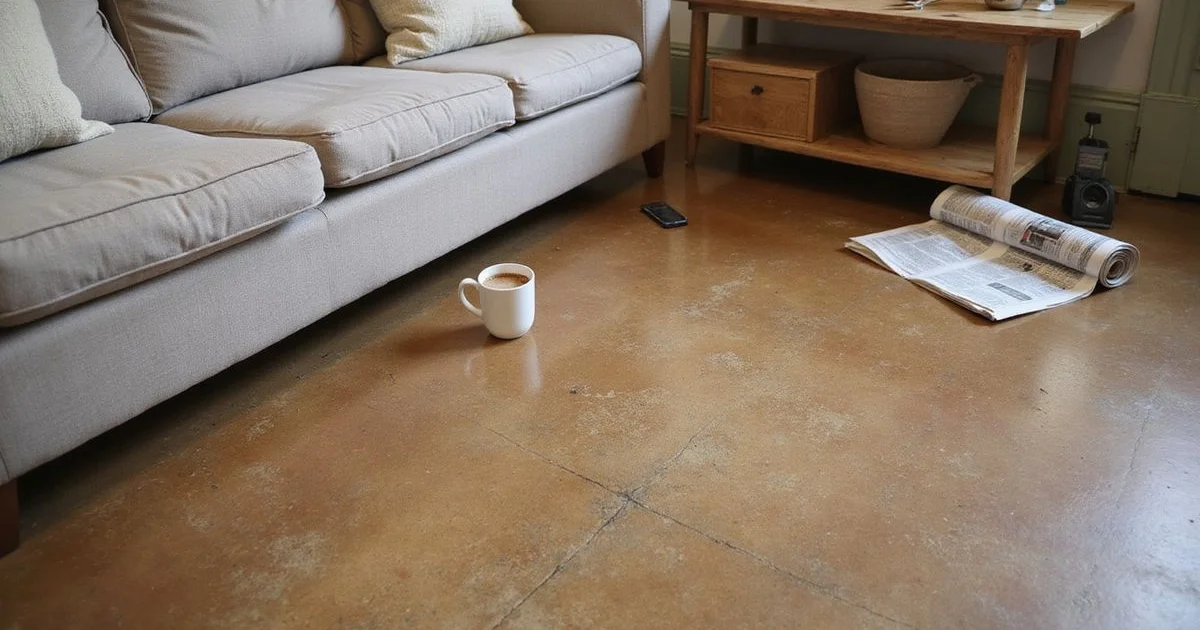
Staining is about colour. An acid stain reacts chemically with the concrete to produce mottled, variegated tones. A water-based dye penetrates and delivers more consistent, predictable colour. Either way, you are changing what colour the floor is.
Polishing is about surface. Progressive diamond abrasives and a penetrating densifier refine and harden the concrete, controlling how much aggregate shows and how reflective the surface becomes. You are changing what the floor’s surface is like.
You can do one, the other, or both — and “both” is a very common answer, as our polished concrete work regularly shows.
Acid stain and dye are not the same thing
Worth separating, since “stain” covers both:
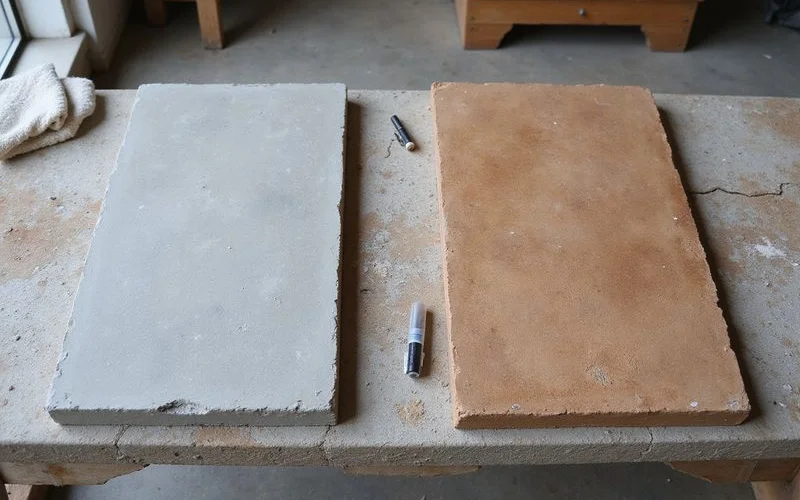
Acid stains react with free lime in the concrete to form mineral deposits. The result is variegated and somewhat unpredictable — mottled, translucent, with movement across the floor. The palette is limited to earth tones: browns, tans, soft greens, rust. People choose it for exactly that organic character, and accept that two slabs will not react identically.
Dyes are pigments carried in water or solvent that penetrate the surface. Colour is far more controllable and the palette is wider, including greys, charcoals, and colours no acid stain produces. Dyes give consistency; acid stains give character.
For interior polished floors we most often use dye, because it works predictably within the polishing sequence.
Combining colour with polishing
The usual sequence: grind to the agreed aggregate exposure, apply dye, densify, then continue honing and polishing through the finer grits. The colour ends up within the surface being polished rather than sitting on top of it, which is why it wears with the floor rather than scratching off it.
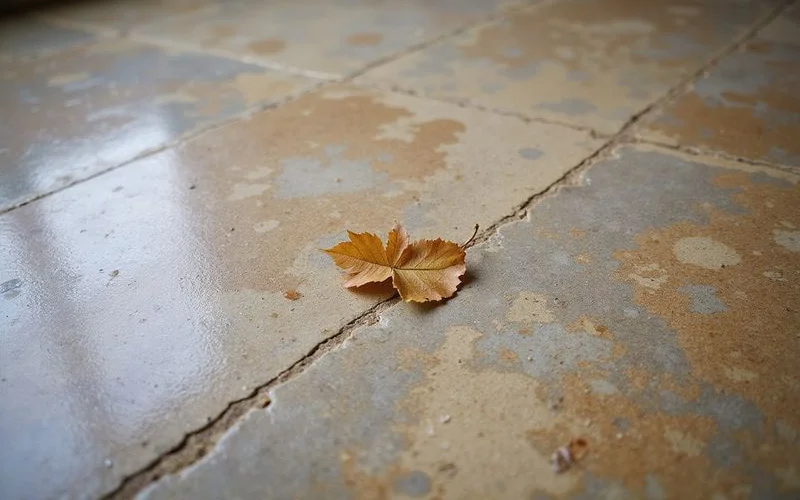
Two practical notes. First, exposure affects how colour reads: a deeply exposed floor shows more stone, and stone does not take dye the way cement paste does, so the colour becomes a background rather than the whole story. Second, colour does not hide repairs. It softens the contrast between a patch and its surroundings, sometimes considerably, but a trench line stays a trench line.
Stained but not polished
A stained floor that has not been mechanically polished needs protection — normally a topical sealer, with the maintenance cycle that implies. It will look coloured and glossy, and it will behave like a grind-and-seal floor rather than like polished concrete.
That is a legitimate choice, particularly where the slab will not support polishing. It should just be a deliberate one.
How to decide
| If you want | Choose |
|---|---|
| Natural concrete tones, refined surface | Polishing alone |
| Warmth or a specific colour, with a durable surface | Dye plus polishing |
| Organic, mottled, unpredictable character | Acid stain, then polish or seal |
| Colour on a slab that cannot be polished | Stain plus a topical sealer |
| Maximum colour consistency across a large area | Dye, with sample approval per area |
Always see it on your own slab
Colour on concrete is a reaction between product and material. The same dye on two different slabs gives two different results. A sample panel on your own floor is the only reliable preview.
Where colour earns its place
Colour is not automatically an improvement, and we say so on projects where the natural concrete is already good. Where it genuinely helps:
Evening out a patchy slab. Where multiple pours, old repairs, or staining leave a floor tonally inconsistent, a dye can pull the whole surface toward one reading. It will not erase a trench line, but it narrows the contrast considerably.
Warming a cold room. North-facing rooms and spaces with limited natural light can make grey concrete feel severe. A warm tone changes the feel of the room more than most people expect.
Matching a design scheme. Where cabinetry, joinery, and wall colours are already decided, a floor that reads charcoal rather than mid-grey can be the difference between a scheme working and not.
Adding depth to a cream finish. A cream floor has little aggregate to look at. Colour gives the eye something else to read.
Where it helps less: on a deeply exposed aggregate floor, where the stone dominates and does not take dye the way the surrounding paste does.
What to ask for in a colour sample
Colour decisions go wrong when the sample was not representative. Ask for:
- The sample applied to your own slab, not a supplied panel
- At least two adjacent tones, so you are comparing rather than guessing
- The sample polished to your chosen sheen, since sheen changes how colour reads
- A look at it in daylight and under the room’s own artificial lighting
- A photograph of the sample kept with the written scope, so there is a reference later
A dye that looked right on a workshop panel can read completely differently on a slab with its own base colour.
The order that keeps options open
If you are unsure about colour, start by deciding exposure and sheen — those are covered in our finishes guide. Grind a test area, look at the natural concrete under your own lighting, and only then decide whether it needs colour. A surprising number of homeowners who arrive certain they want a stained floor choose the natural tone once they see it properly ground.