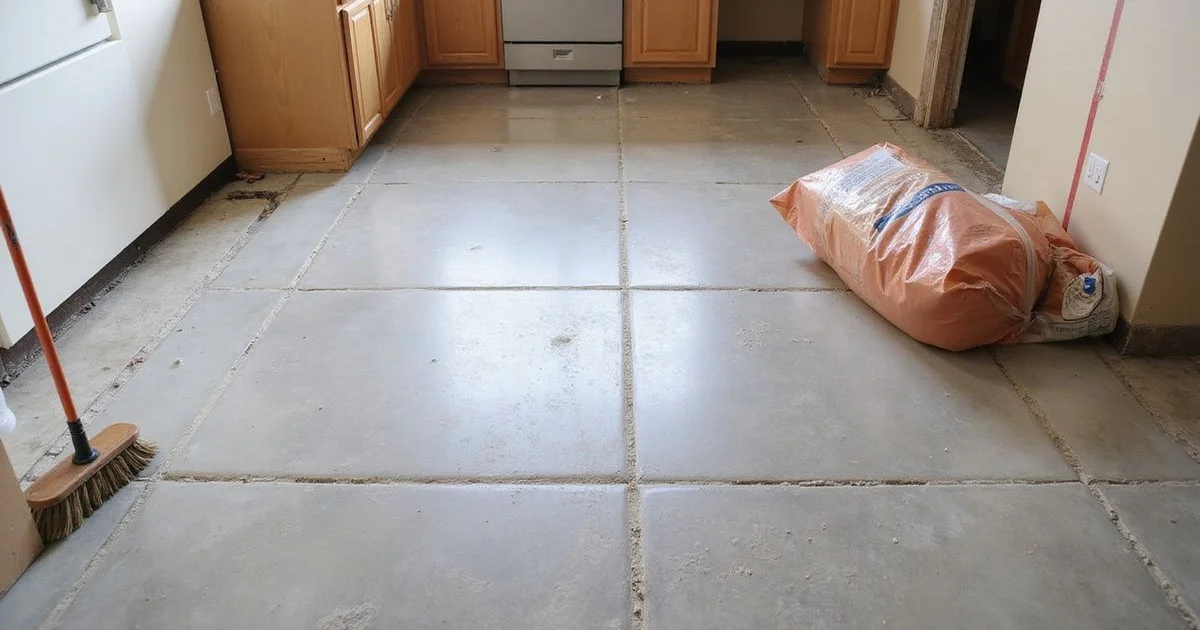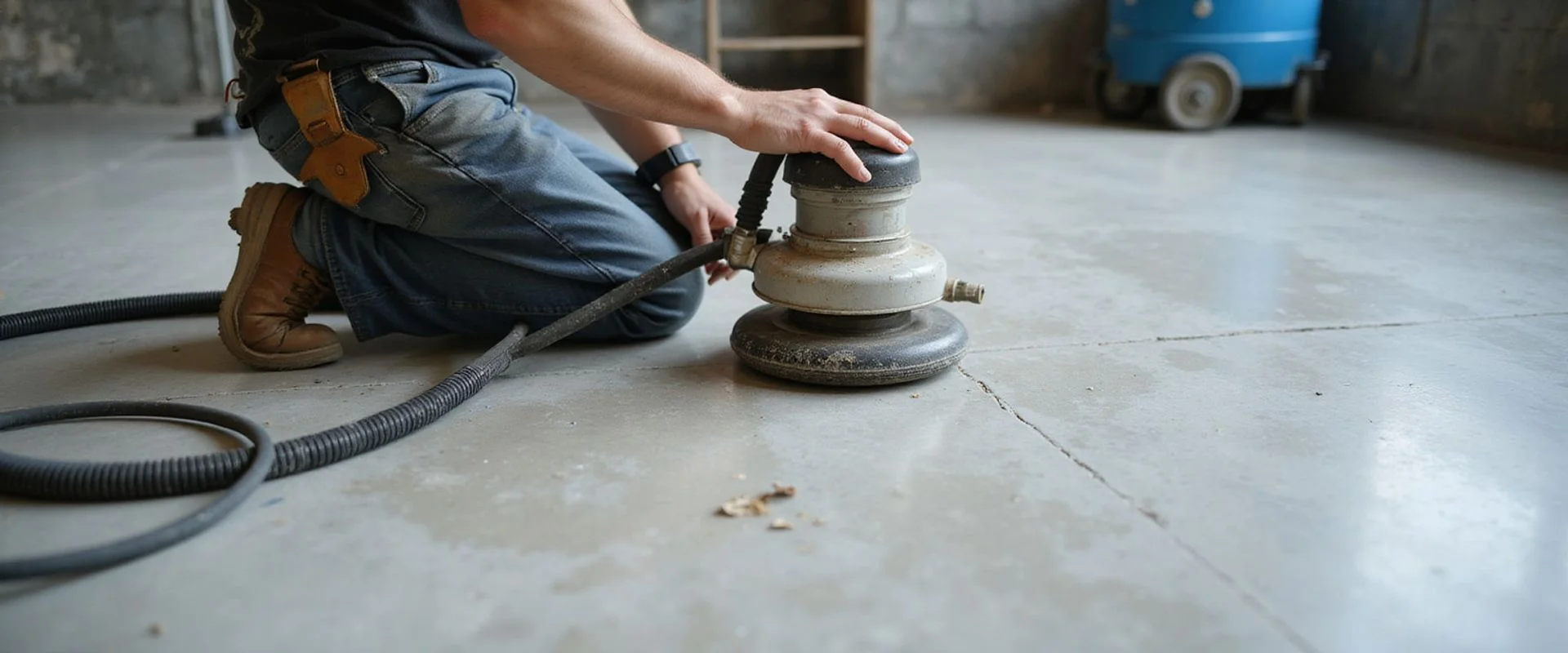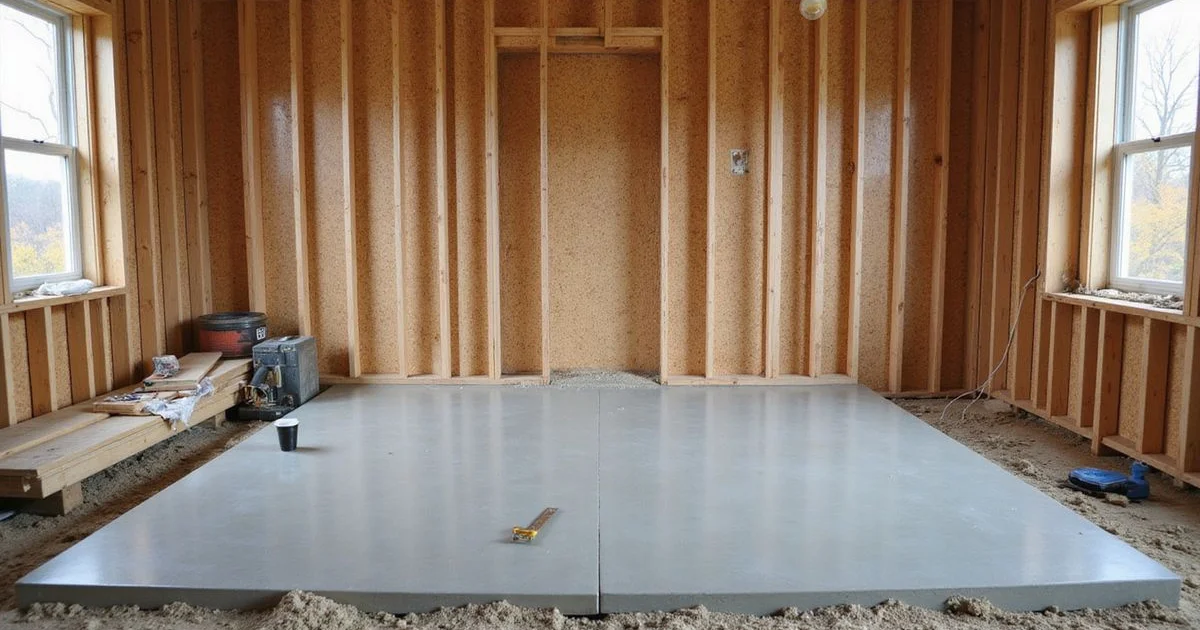
Fall is when a lot of Austin builds firm up their specifications for next year’s pours. If a polished concrete floor is on your wish list, this is the useful window — not because of the weather, but because almost every decision that determines how a polished floor turns out happens before the slab is finished.
Once concrete is down, your options narrow to whatever that slab can become. Before it goes down, you can influence the lot — which is why we prefer to be involved in polished concrete floors in Austin at the specification stage rather than after the pour.
Why the slab spec matters more than the polishing spec
People assume the finish is created by the polishing contractor. It is created by the concrete, and then revealed by the polishing contractor. Four things set the ceiling on your result:
- Mix design and aggregate. If you want visible stone, the mix needs suitable aggregate positioned close enough to the surface to be reached without cutting excessively deep.
- Flatness. A flatter pour means less grinding to get an even plane, and a far more consistent cream finish if that is the look you want.
- Finishing and curing. Over-trowelled or poorly cured concrete can be soft or inconsistent at the surface, which shows up as patchiness after polishing.
- Placement sequencing. Cold joints, pour breaks, and different truck loads can leave visible tonal differences across a floor.
None of those can be corrected later with a finer grit.
The coordination conversation to have now
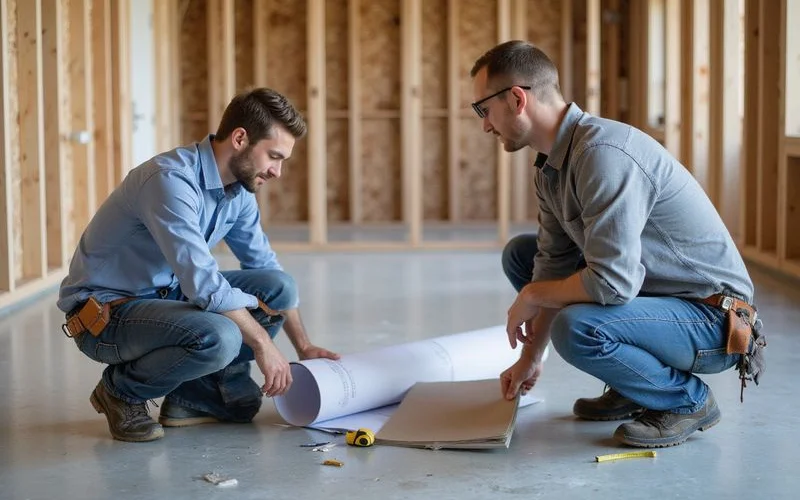
Getting your polishing contractor and your builder in the same conversation before the pour is the single highest-value thing you can do this fall. What gets agreed:
| Topic | Decided by | Timing |
|---|---|---|
| Mix and aggregate | Builder + concrete supplier | Before ordering |
| Target flatness | Builder + finishing crew | Before the pour |
| Curing method and duration | Builder | At the pour |
| Exposure and sheen target | Homeowner + polishing contractor | Before the pour, confirmed on a sample |
| Slab protection plan | Builder + all trades | Immediately after curing |
| Polishing window | Builder’s programme | Late in the build |
The last two are where most projects lose quality. We cover the sequence in detail in planning polished concrete for new construction.
Protection is the step everybody underestimates
A new slab that has been exposed to framing, drywall, painting, and plumbing for six months arrives at polishing day with impact chips, paint splatter, adhesive from taped-down protection, and rust staining from steel left sitting on it overnight.
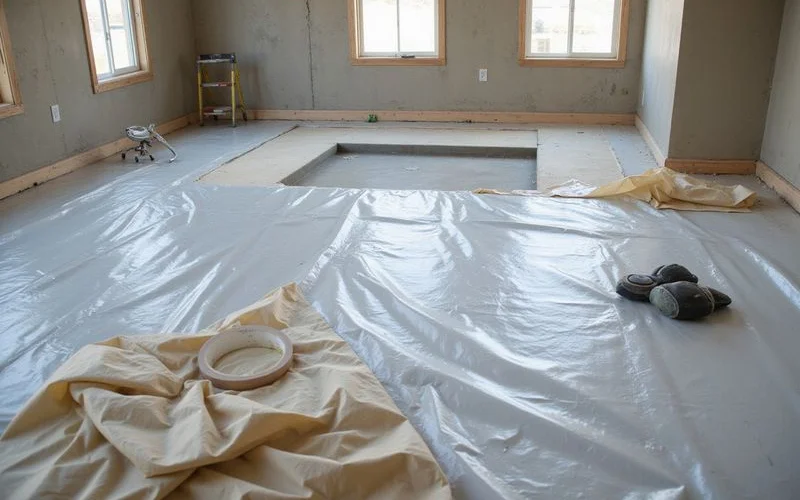
Some of that grinds out. Some does not — deep impact damage and certain stains reach further into the slab than the exposure level you agreed. The cure is boring and effective: cover the slab properly, specify a covering that does not leave adhesive residue, and make protection somebody’s named responsibility in the build programme rather than a shared assumption.
A question worth asking your builder
“Who owns slab protection between the pour and the polishing date, and what covering are they using?” If nobody can answer it, that is the risk identified.
Cure time and the polishing window
A new slab typically needs somewhere around 28 days before densification and high-sheen work, and we confirm readiness on site rather than working purely to the calendar. Central Texas fall weather is usually kind to curing — mild days, cooler nights — but humidity and cover conditions still vary from site to site.
Scheduling the polishing window late in the build reduces the protection problem but tightens the programme. Scheduling it early gives the crew clean access but means the floor has to survive every trade that follows. Most builds land on a compromise: polish before final fit-out, then protect through the last stages.
Choosing the finish while you still have options
Because the mix and pour affect what is achievable, exposure should be discussed before ordering concrete, not after. If you want deep exposed aggregate, the supplier needs to know. If you want an even cream finish, flatness tolerance becomes the important number.
Sheen is a separate decision and can be made later, though it is worth agreeing early so nobody is surprised. Our aggregate exposure guide explains how grinding depth relates to the stone you end up seeing, and the finishes guide covers how each sheen level actually reads in a finished room.
A fall checklist for next year’s slab
If your pour is scheduled for the coming months, work through this before concrete is ordered:
- Decide, at least provisionally, whether you want cream, salt-and-pepper, or exposed aggregate.
- Tell your builder that the slab is the finished floor — it changes how the pour is treated.
- Agree the mix and aggregate with the supplier in light of that target.
- Set a flatness expectation and confirm who is finishing the pour.
- Write slab protection into the programme with a named owner.
- Book a sample or mockup review once the slab has cured.
Get those six things right and the polishing itself becomes the straightforward part.
Building in Austin next season? — See how we plan residential polished concrete
Residential Polished Concrete
Polished concrete for homes — remodels and custom builds, with livable finishes and sample-based expectations.
Read the service page
Austin Polished Concrete Floors Editorial Team
Editorial Team
Content prepared in the voice of the Austin Polished Concrete Floors Editorial Team. Established in Austin in 2001, the company polishes concrete for homes and commercial properties across Austin and surrounding Central Texas communities, with installers and estimators contributing recurring questions and field experience.
Polishing concrete in Austin since 2001