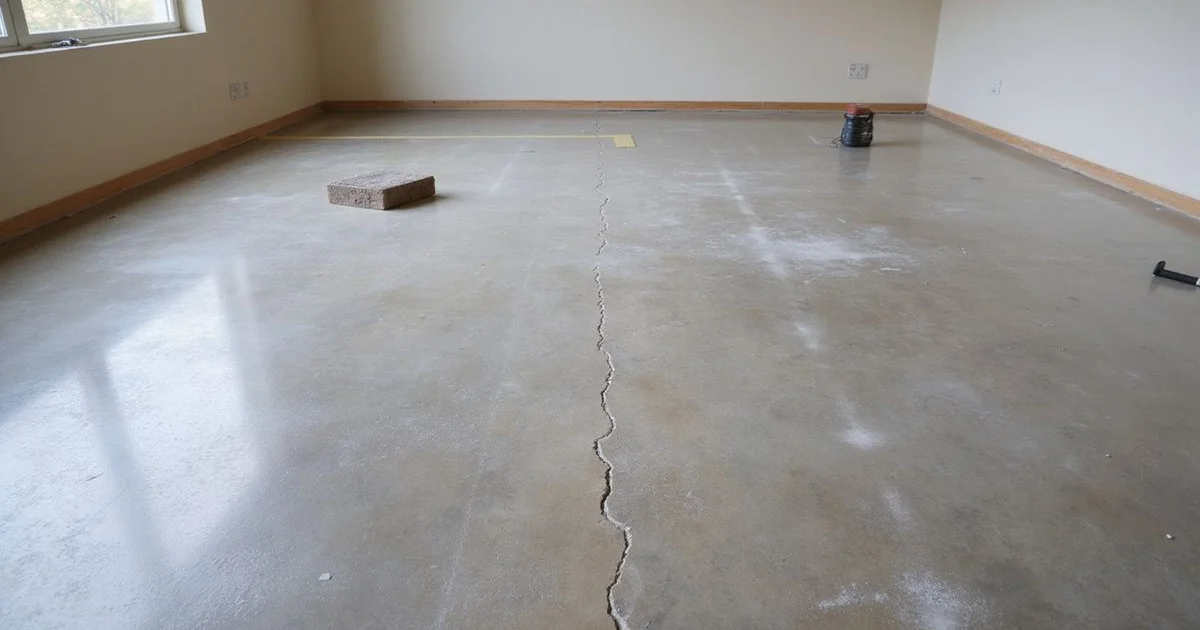
Why Austin slabs move
Much of Central Texas sits on expansive clay. These soils absorb water and swell during wet spells, then shrink as they dry through a Texas summer. The ground under a slab does not move uniformly — edges dry faster than the centre, trees draw moisture from one side, and drainage varies around a property.
The result is differential movement, and concrete is strong in compression but not in tension. When part of a slab is supported and part is not, it cracks. That is not a sign of poor workmanship; it is the standard behaviour of slab-on-grade construction in this soil.
Understanding this changes the conversation about polished concrete in Austin from “will it crack?” to “what do we do about the cracks that are there, and what happens if new ones appear?”
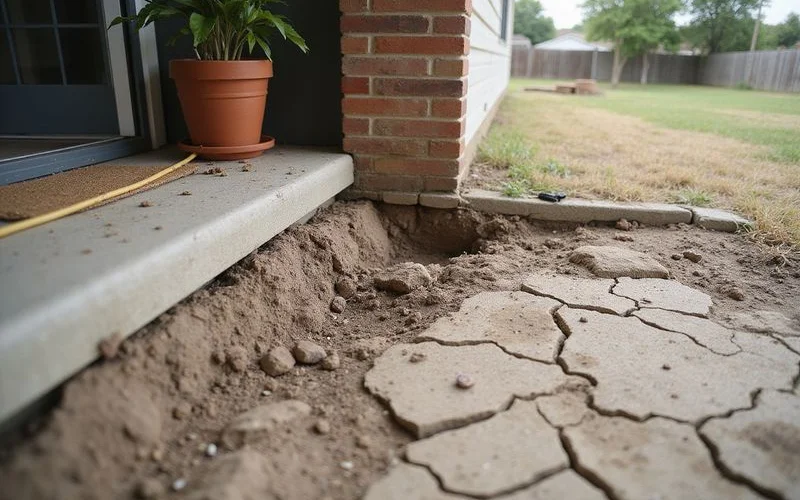
Reading the cracks in your slab
Not all cracks carry the same meaning. During an assessment we look at:
Width. Hairline cracks are extremely common and usually cosmetic. Wider cracks warrant more attention.
Vertical displacement. If one side of a crack sits higher than the other, the slab has moved differentially — a more significant signal than width alone.
Pattern. Random map cracking near the surface often relates to curing. Long, relatively straight cracks running corner to corner suggest structural stress.
Freshness. Clean, sharp edges suggest recent movement. Rounded, dirt-filled edges suggest an old crack that has been stable for years.
Correlation with the building. Doors binding, sticking windows, and visible level changes in the room point to ongoing movement that no flooring decision will address.
How cracks are treated before polishing
Cracks are dealt with during preparation, not hidden at the end.
The crack is opened out and cleaned so the filler bonds to sound concrete rather than dust and debris. Filler selection depends on behaviour: a rigid material for a stable crack where you want a solid, grindable surface; a semi-rigid polyurea where a joint needs to carry load and tolerate slight movement. Control joints in commercial floors are filled specifically to support the joint edges against wheel traffic.
Once filled, the repair is ground flush and polished with the surrounding floor.
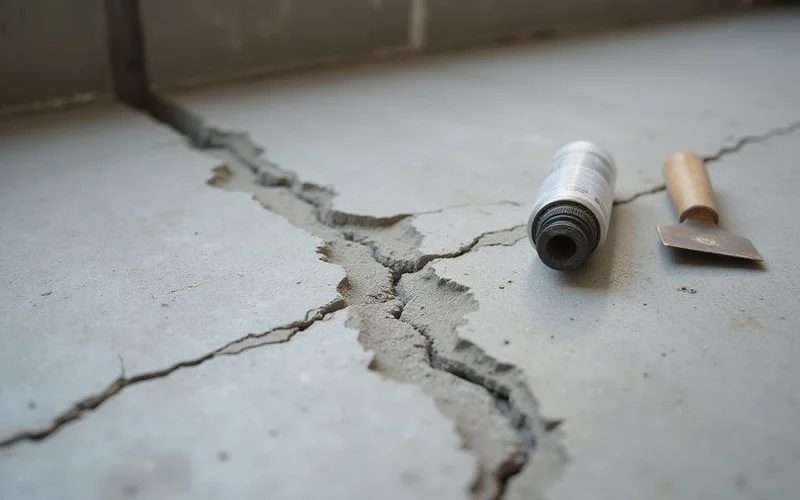
What a repaired crack looks like afterwards
Visible, but deliberate. The filler is a different material from your slab, so it reads as a line. Well-executed, it looks like part of the floor’s character. It does not look like the crack was never there, and we will not tell you it will.
What polishing can and cannot do
| Question | Answer |
|---|---|
| Will polishing remove existing cracks? | No — they are filled and managed, not erased |
| Will polishing cause new cracks? | No — grinding removes material, it does not stress the slab |
| Will new cracks appear later? | Possibly, if soil movement continues |
| Can a filled crack reopen? | Yes, if the slab moves again |
| Will an overlay stop movement? | No — it resurfaces the floor, nothing more |
| Is a cracked slab still worth polishing? | Very often, yes |
That last row is worth dwelling on. Plenty of Austin homes have slabs with old, stable cracks that polish into genuinely beautiful floors. Filled cracks in a salt-and-pepper finish read as part of the material’s story to most people who live with them.
When to pause and get a structural opinion
Stop and get a structural review before any finishing work if you see:
- Cracks that have visibly widened over recent months
- Vertical displacement you can feel with a foot or a hand
- Doors and windows binding in the same part of the house
- Previous foundation repair work whose outcome you are unsure about
Polishing a slab that is actively moving means paying for a finish and then watching it change. The order of operations matters: stabilise first, finish second.
Reducing future movement around your slab
Flooring contractors cannot control soil, but owners can influence it. Consistent moisture around a foundation is the goal: functioning gutters and downspouts directing water away, drainage that does not pond against the slab edge, and — where a property already has a watering routine — keeping it consistent through the summer rather than letting the perimeter dry out completely.
None of that is a guarantee. It simply reduces the size of the seasonal swings that drive slab movement.
Does the season matter?
Slightly, and not in the way people expect.
Grinding and polishing are indoor work, largely unaffected by weather. What the season affects is the slab’s position in its annual cycle. Central Texas clay is typically at its driest in late summer, when shrinkage is greatest and cracks are at their widest. After sustained winter and spring rain the soil swells and some cracks close up.
That means a crack measured in September may look different in March. It does not change how we repair it — filler is selected for the crack’s behaviour, not its width on the day — but it is worth knowing if you are comparing an assessment made in one season with what you see in another.
Where movement appears genuinely active, watching a crack across a couple of months before committing to a finish is a reasonable and cheap precaution.
Deciding how to proceed
If your slab has cracks and you want a polished floor, the sequence is straightforward: assess the cracks, get a structural opinion where the signals warrant one, repair appropriately, then decide between polishing the slab as it is or placing a polishable overlay for uniformity. Both are legitimate. Choosing between them with full information is the part that matters, and the underlying suitability question is worked through in can existing concrete be polished.